Ashley Rous: The icon who paved the way for ‘Thrifttok.’
From 2018 to late 2020, ‘bestdressed’, or Ashley Rous, rose to fame in fashion media, beloved by her 3 million-plus fans for her thrift-focused videos. In fact, bestdressed was one of the first prominent fashion “influencers.” Unlike the previously famous fashion influencers—Marilyn Monroe, Audrey Hepburn, Grace Kelly, etc—Ashley brought something new to the fashion world. In contrast to their luxury movie-star aesthetics, Ashley was far more relatable to her audience: a young college student, aiming to elevate cheap, second-hand fashion.
In my experience, while I see many more fashion influencers now, like Macy Eleni or Brittany Xavier—or even many popular one-off videos about fashion from thrift hauls to Depop mystery bundle unboxings—Ashley stood as one of the first of her kind amid fashion’s transition to social media.
Uniquely, Ashley used fashion as an approach to education. She posted on how to upcycle clothes, lookbooks, tips on how to style clothes, and how to discover your personal style. From her, I learned how to transform my jeans into shorts, what closet staples I should buy, and how to feel confident in what I wear. As a self-conscious middle schooler, she served as my relatable, passionate, eccentric introduction to the fashion world.
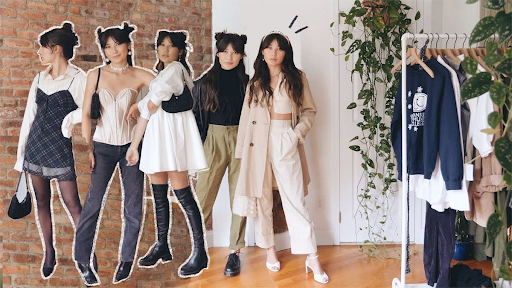
Photo: Substack
I see her legacy today, particularly on TikTok. #thriftflip and #upcycle have 302.2k and 420.7k posts, respectively, videos that appear on my “For You Page” frequently. Although Jocelyn Elizabeth first introduced thrift flipping on YouTube in 2011, I believe Ashley played a crucial role in bringing the practice to a mainstream, Gen Z audience, averaging well over a million views per video. Reframing upcycling as both accessible and creative—combining step-by-step tutorials with personal storytelling—her videos helped normalize second-hand consumption and transformation not as a niche hobby but a widely embraced form of self-expression, still seen today.
However, one major difference among fashion influencers today is the appropriation of brand deals. Exceptionally, fashion influencers drive sales on TikTok shop: a whopping 50% of TikTok shop purchases are inspired by influencer posts. In her YouTube prime, Ashley rarely took brand deals—and when she did (one from Amazon), her fanbase held her accountable to her sustainable message.
Ultimately, I hope that future fashion influencers continue to take note of the ways in which Ashley used fashion to authentically represent herself, encouraging others to follow in her footsteps. But just as importantly, I hope audiences reflect on their role in shaping fashion influencer culture. After all, Ashley’s departure from YouTube was informed by the pressures and invasiveness that can come with online visibility, including an unfortunate encounter with a stalker. Remembering that helps frame her legacy as a pioneer in accessible fashion, but also as a reminder of the responsibilities that come with being apart of an online community.
XOXO, The Fashion Stock Market