Fashion at the FIFA World Cup
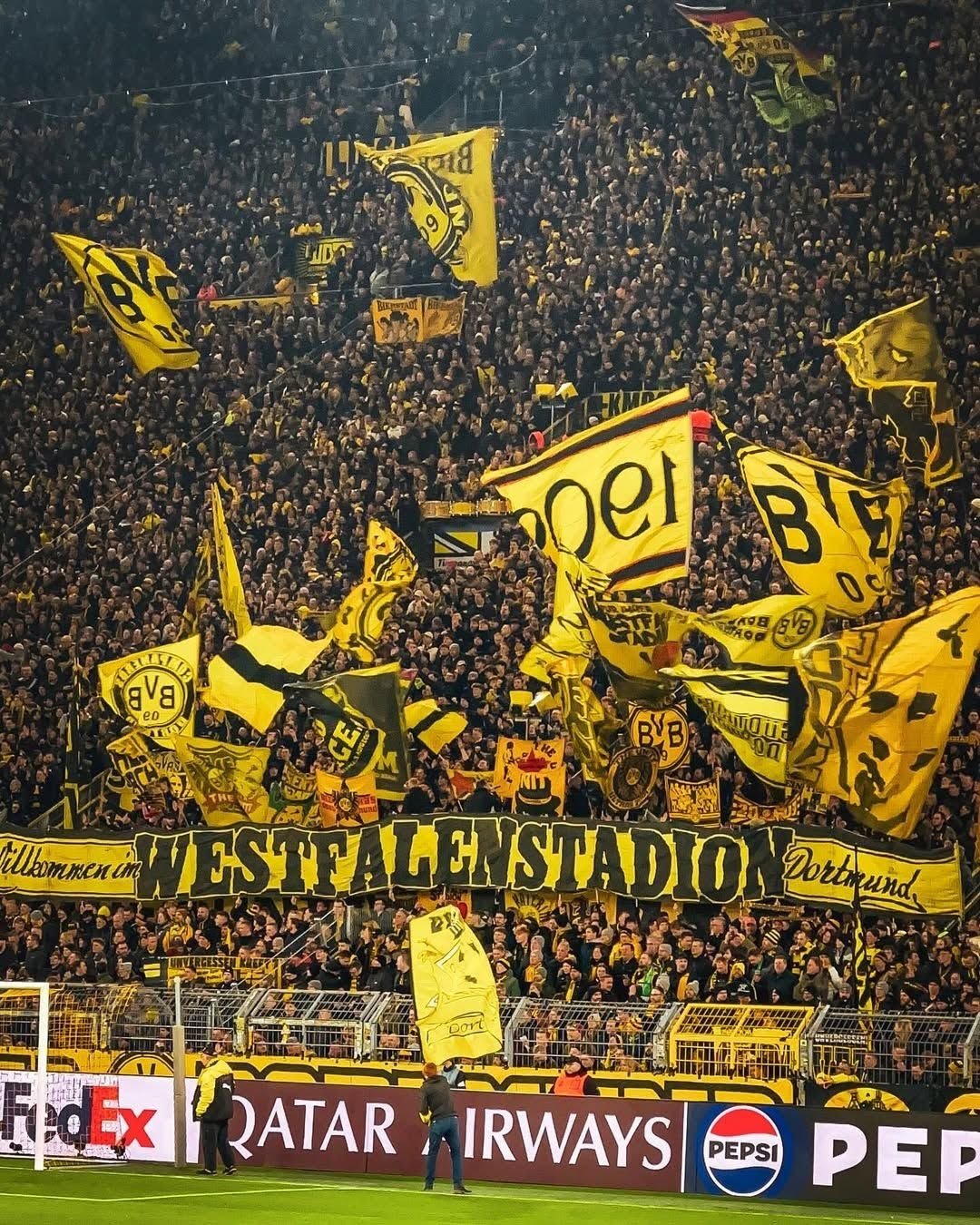
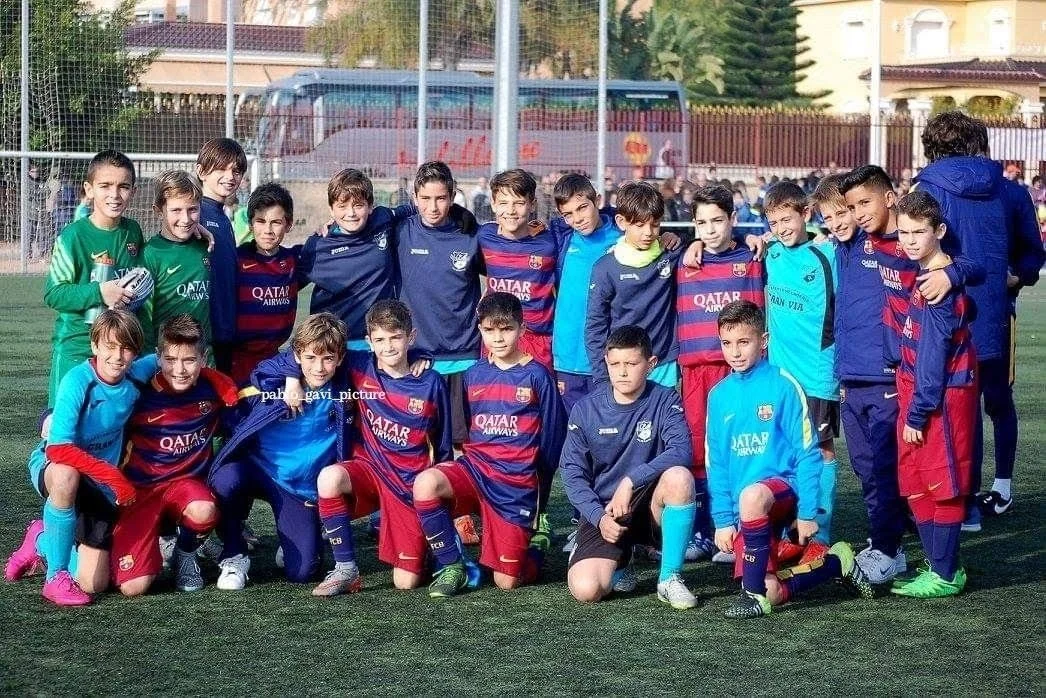
In Europe and Latin America, especially in Germany (Bundesliga), England (Premier League), Spain (El Clásico, La Liga), Italy (Serie A), Portugal (Ronaldo), Brazil (“O País do Futebol“), Argentina (Messi) and France (Ligue 1), football plays a very important role. Already as a child you play football with your friends at primary school and if you are good you can play in the school´s team. If you are very good you can go to a sports based middle/high school and play in a club and if you get discovered you can play in a U15-U23 team (under 15-23 years old), some of them are from big clubs like FC Bayern München, Borussia Dortmund, FC Barcelona and Real Madrid or from the National Team, which are normally where the good players are “created“ like Jamal Musiala (Bayern München), Erling Haaland and Jude Belligham (Borussia Dortmund), Aitana Bonmatí, Xavi Hernández and Lamine Yamal (Barcelona) and Dani Caravajal and Íker Casillas (Real Madrid). The better you are, the better the clubs are that want you to be part of their team, the bigger your fanbase gets and the more famous labels request you for ads. And then, everything comes together every four years at the World Cup.
But what has it to do with fashion?
Photos: Pinterest
The kits
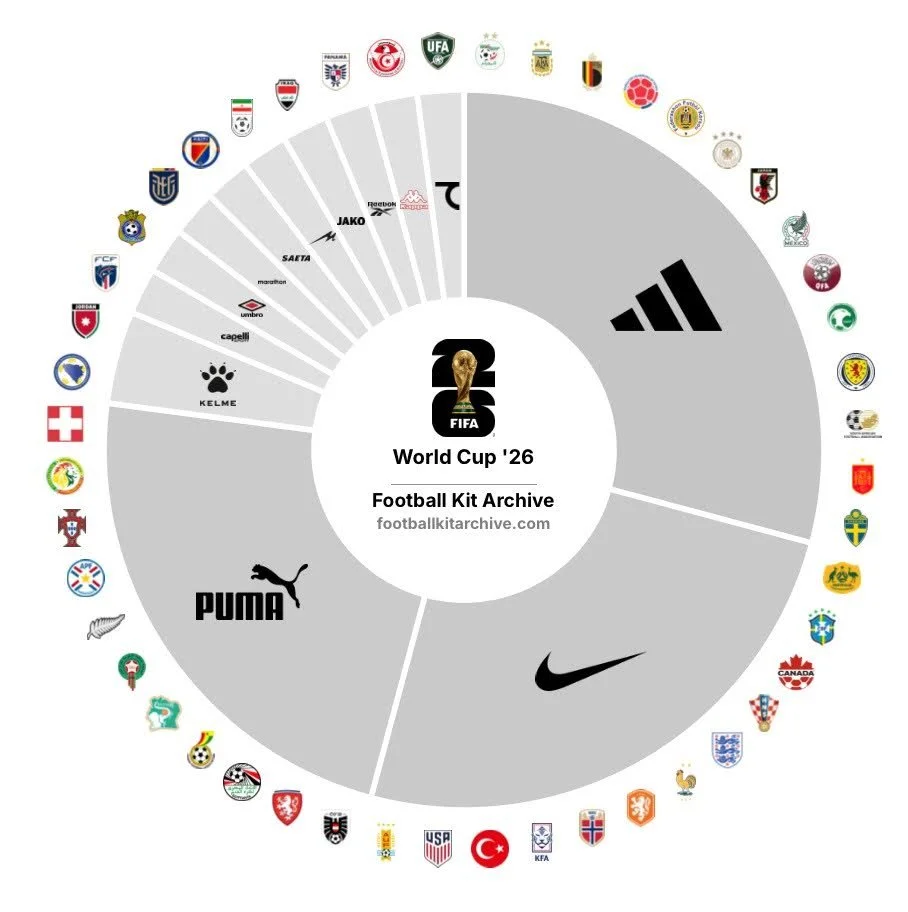
Every team has a home and away kit. The home kit is worn when the team plays at their home stadium (well no shit) and the away kit is worn when they are the guests of another team. The reason for this is that you have to recognize which team is which and sometimes the kits are too similar, so one has to wear the away kit. The goalkeeper also wears a different colour to distinguish them from the rest of the team and the referee. The design of the national teams kits is changed every two years (both the home and away kit), but when the design sells well it can be kept for more years. What stays the same are the national colours, traditions, labels and the national symbol (eg. in France a rooster) or coat of arms (eg. Spain‘s coat of arms), which are both pictured on the shirt. The main labels this year are Adidas (eg. Spain, Germany, Mexico and Belgium), Nike (eg. France, England, Norway and USA) and Puma (eg. Portugal, Ghana, Egypt and Switzerland) and then there are also smaller labels like Reebock, which only supply one national team, in this case Panamá.
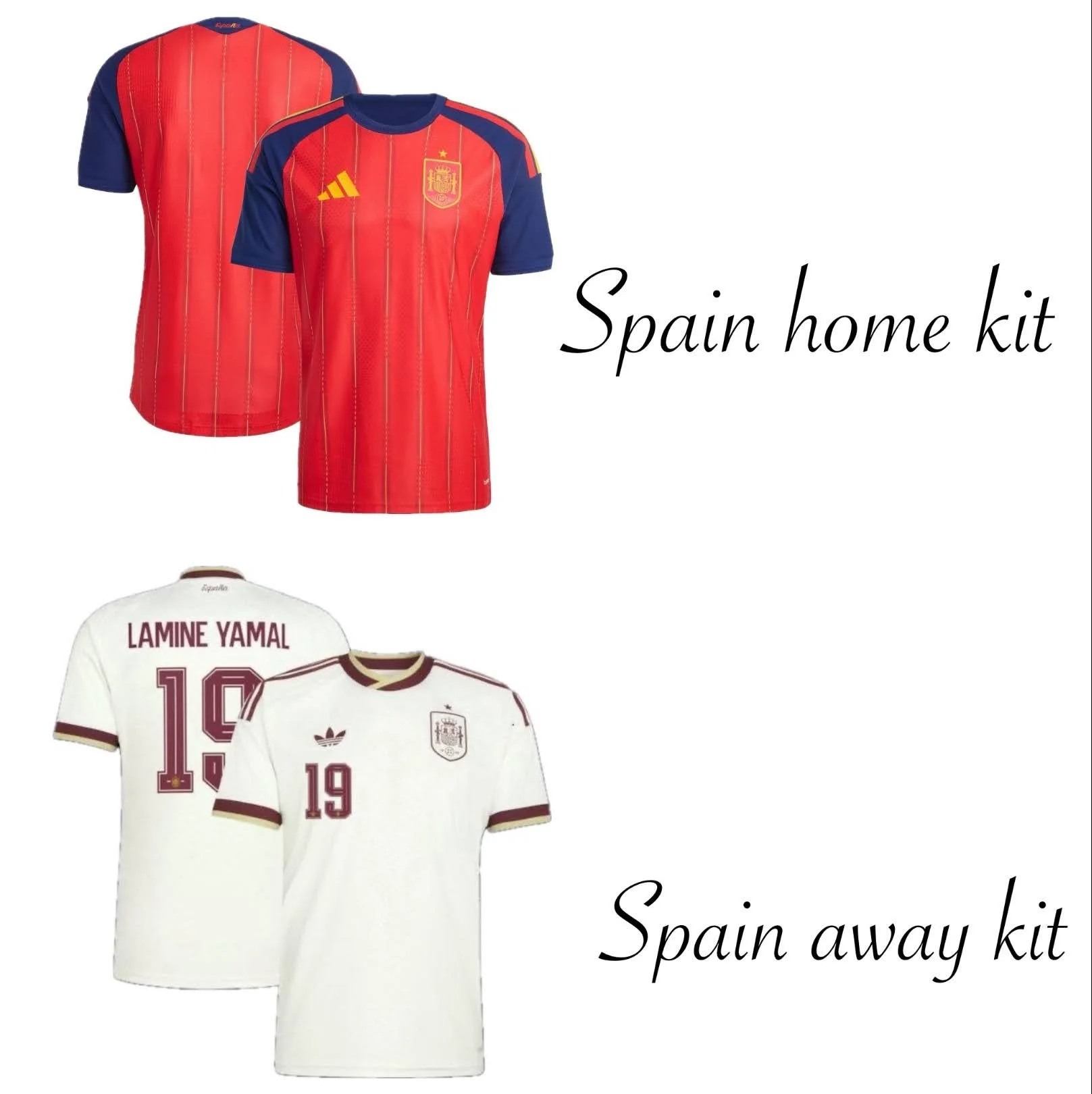
Photos: Pinterest
National Pride and Streetwear
An important thing at the world cup is the national pride, rooting for your own country and wearing the flag‘s colours without being considered a fascist (yes, that‘s a thing in Europe). What is also an important factor is that football is not a luxury sport, it‘s a sport for everyone and it‘s from the street. In Europe and Latin America you can see kids playing football on the street using random trees as net. Also, there is no dresscode or anything (well, except the national colours or if you have one, a teams shirt) like for example in Wimbledon, which is a much more luxurious event. National pride is often combined with (baggy) jeans and typical accessories (like Mexico with the sombrero and USA with cowboy boots). The suppliers do it too, they make the designs more vintage and use streetwear cuts. Old 90‘s kits are sold for more than 300$, Japan, South Korea and Germany have a very clean design which looks very tech and minimalistic and bold graphics like tribal prints and large patterns are used in Mexico, Nigeria and Cameroon which gives an additional streetwear and national pride vibe. Celebrities wear it as a statement, paired with their favourite pair of jeans.
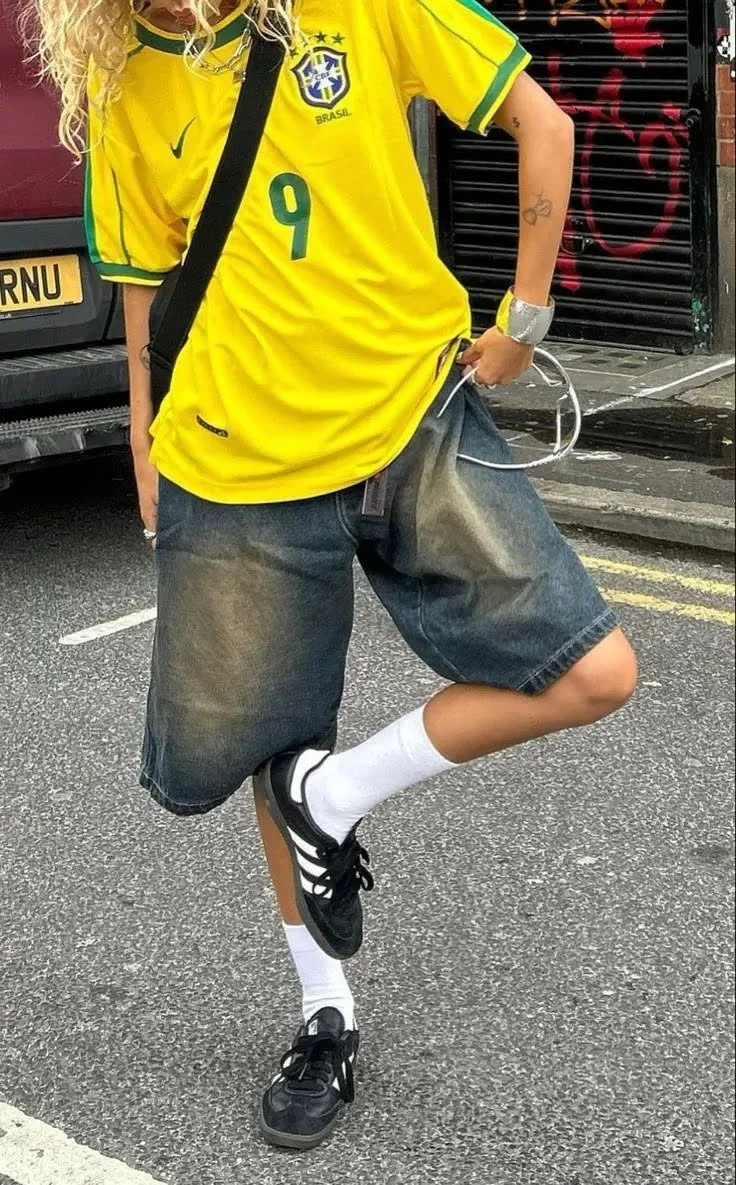
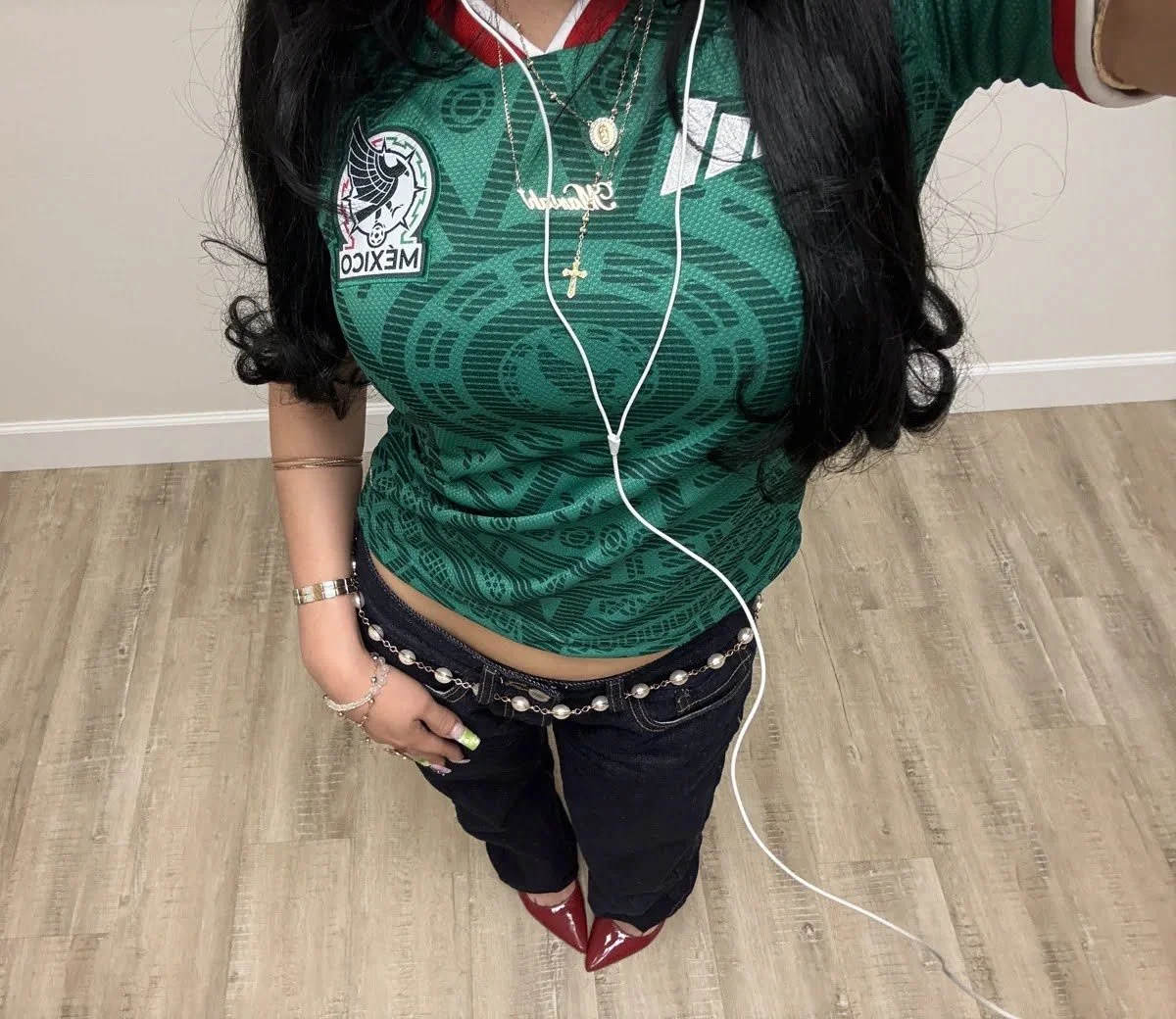
Photos: Pinterest
Stadium Fit and Fan Core
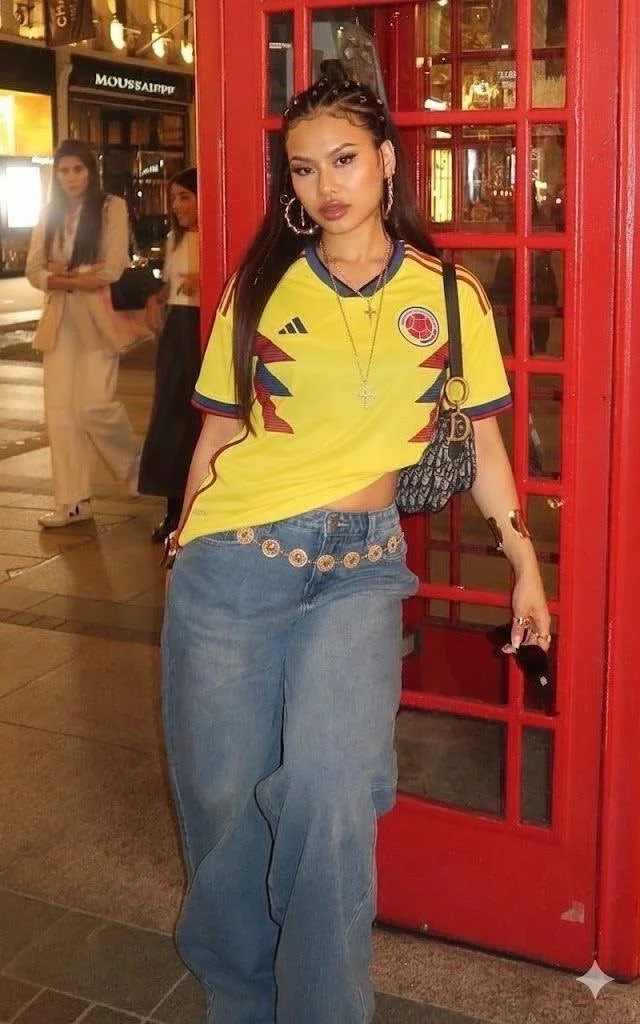
So somehow you need to combine streetwear, national pride and matchday vibe and look like you know what is going on. We already have the national colours respectively kits and key pieces to complete your fit, which are vintage kits, vintage trackjackets (from Adidas, Puma or Nike), Bufandas (scarves with your country‘s flag and name, sometimes also the matchdate, stadium and name of the opponent), baggy jeans, cargos or trackpants and terrace sneakers (Adidas Gazelle, Sama, Puma Palermo, New Balance 550).
This is how you build your World Cup Outfit:
Base layer: Home/away/vintage kit, oversized, snatched (eg. with hair tie) or tucked in, alternative a trackjacket in the national colours
Bottoms: Baggy jeans, jorts, cargos or trackpants (matching the kit)
Shoes: Samba, Gazelle, Palermo, Spezial, anything that looks vintage, they have to be dirty
Accessories: Scarf (also vintage), cap (with the teams logo or colour), anything that gives a vintage flair to the fit
Make-Up: plays an important role, national flag on your cheek or traditional make-up
The important thing is the statement.
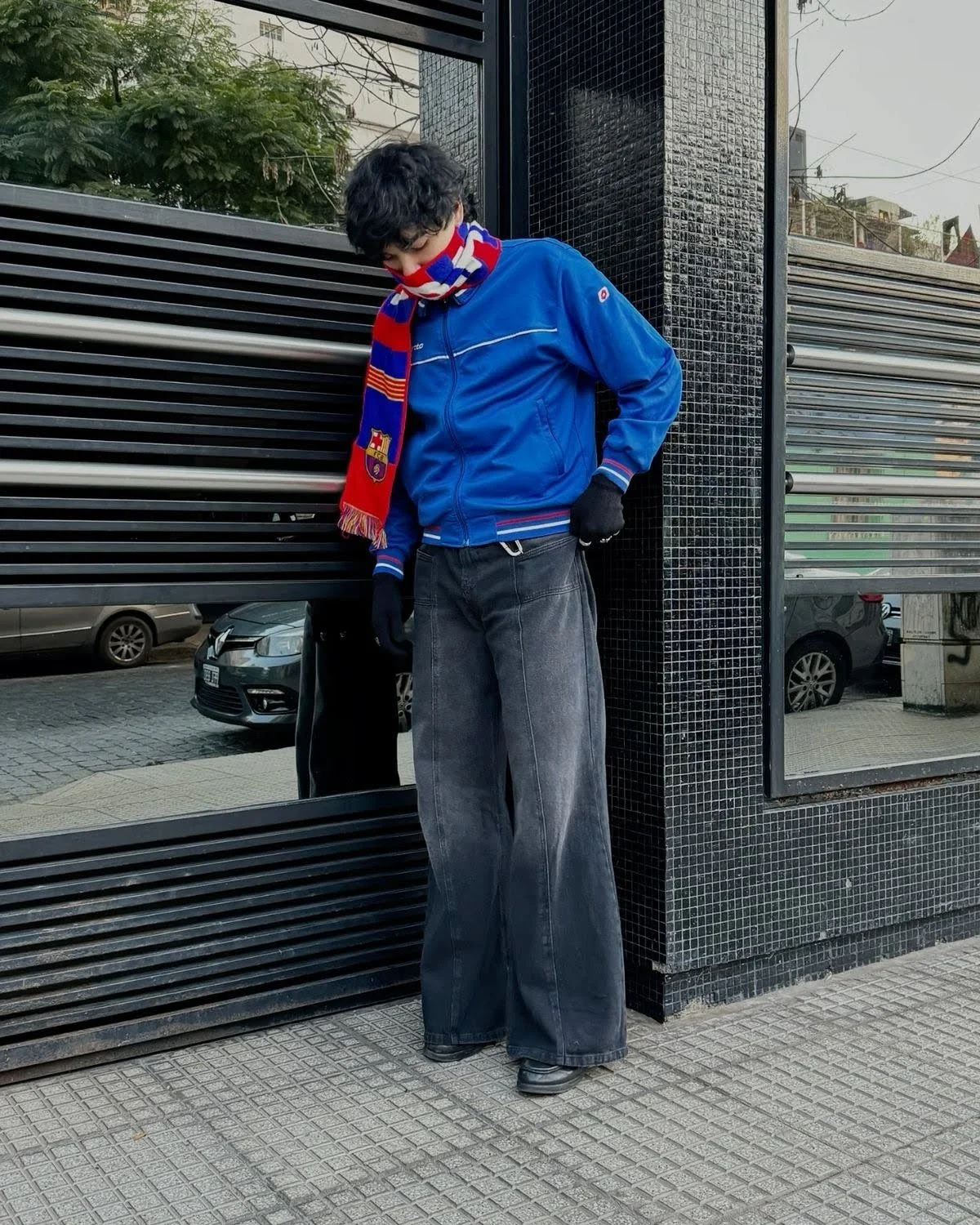
Photos: Pinterest
Luxury and Football
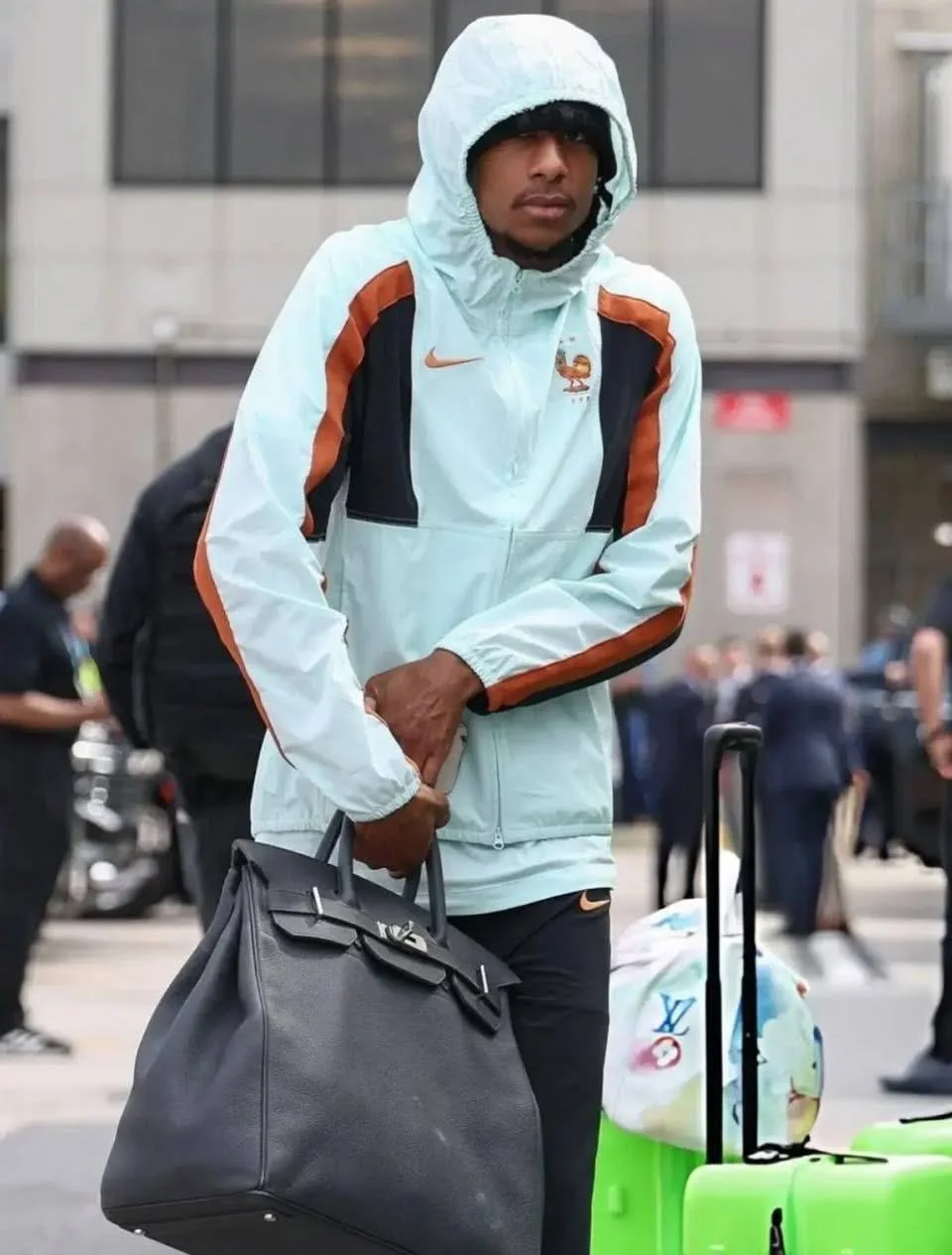
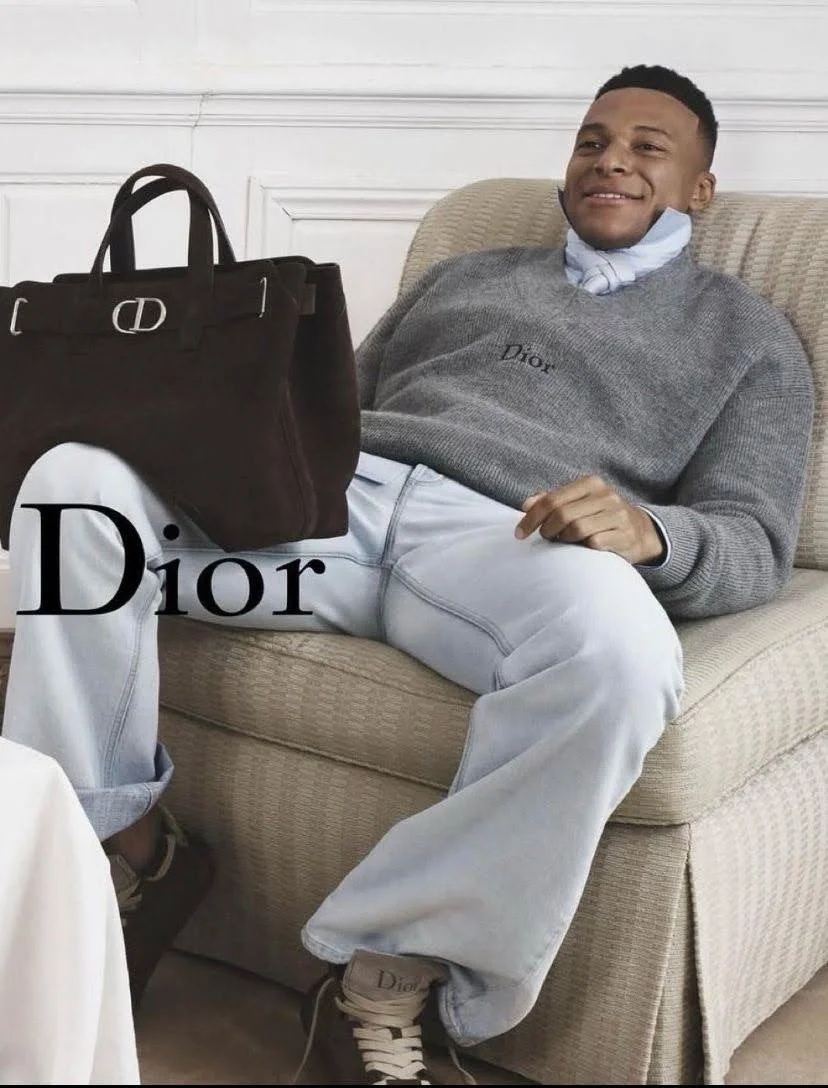
Footballers are adopting luxury bags. You might have heard of Haaland‘s Hermés Bag collection, the “airport fits“ and collaborations of mayor fashion houses and footballers. The world cup trophy is handed over in a Louis Vuitton case (it still ended in spanish player Cucurella’s plastic bag). Kylian Mbappé is Dior‘s global ambassador and representing Dior Men‘s fashion. Haaland owns a special edition Haut à Courroies “Endless Road“ bag and a limited-edition multi-pocket HAC. His whole collection is said to be worth close to $1.3 million. He is not the only adoptive parent of luxury bags: Lionel Messi owns a pocket-fetooned cargo HAC 40, Dutch defender Virgil van Dijk has a putty gray leather HAC, Lamine Yamal posted his brown leather Birkin with custom details and was seen with a Hac à Dos, the entire French football team pulled up with HAC‘s, Louis Vuitton bags and Chanel bags. Loewe is the official fashion and travelwear (aka airport fit) partner of the Spanish national football team including suits for the players and the XL Amazona 180 and large Puzzle bags.
This means two things: luxury bags might get more popular for men and the world cup is now a very important fashion event.
Photos: Pinterest
The 2 Ballon d‘Or, 1 Oscar and 4 Grammys Trio
Women‘s football icon Alexia Putellas, Hollywood‘s icon Penelope Cruz and Latin Pop icon Rosalía (which combined make 2 Ballon d‘Or, 1 Oscar and 4 Grammy nominations) were seen together at the match Spain vs. Austria (the day my Austrian friends started hating me) with the stadium fits. Alexia Putellas wore a sleek all-black ensemble accessorized with black Oakley sunglasses. Penelope Cruz showed her support for La Roja with a red Spain T-Shirt, a gray baseball cap, blue jeans and black sleek sunglasses and their friend Rosalía was spotted with a Spain Kit and bufanda worn as a baklava paired with black pants.
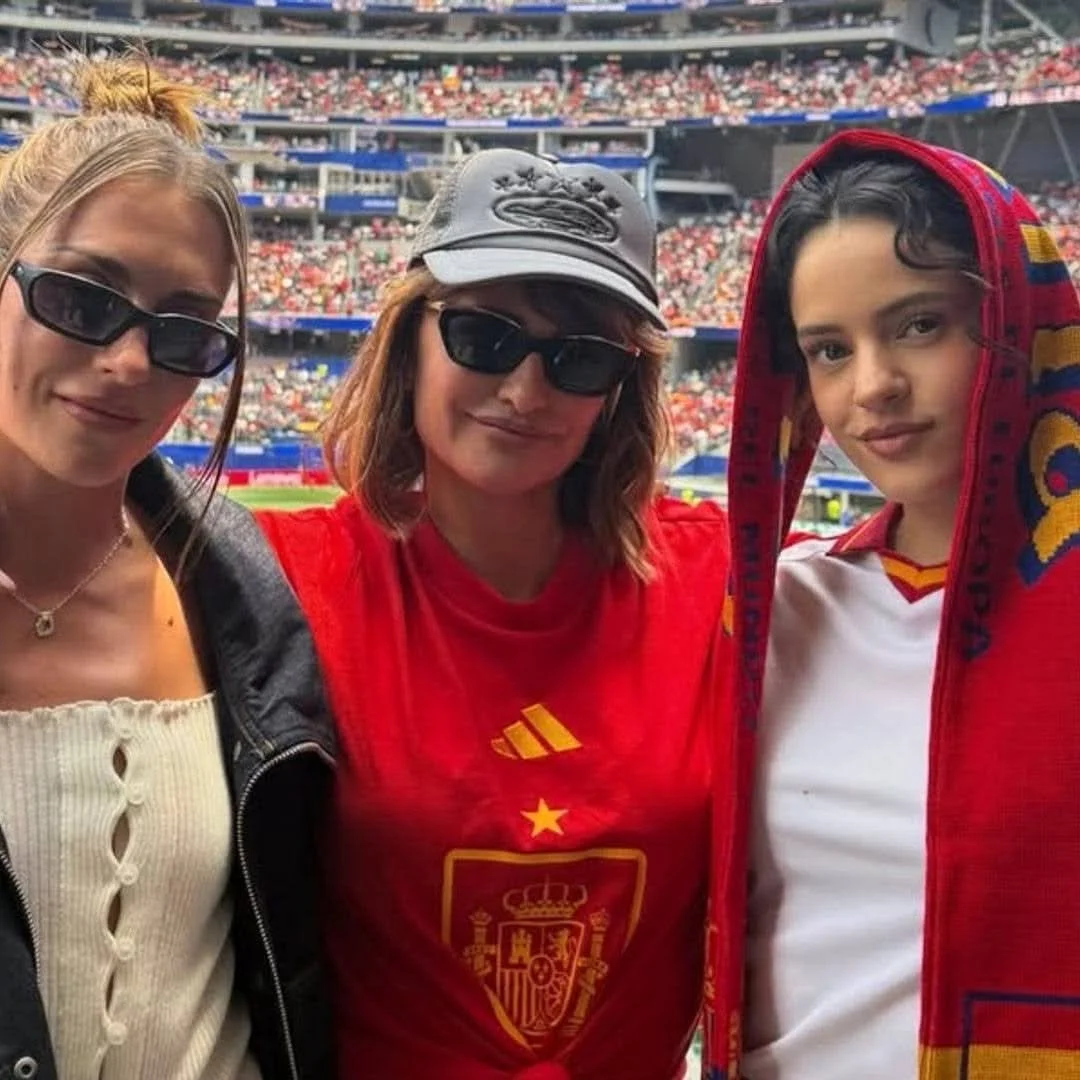
Photo: Pinterest
Germany‘s failure and Jil Sander
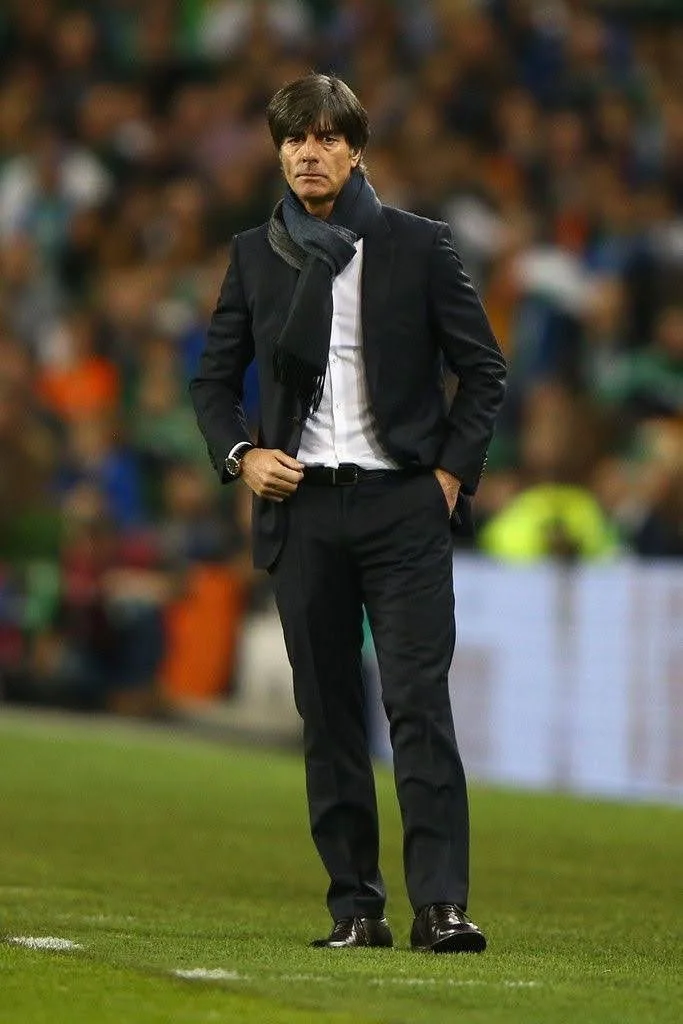
Germany‘s old coach Joachim “Jogi“ Löw always wore Jil Sander suits to the match. The German football association (DFB) wanted to end the “coach in jogging pants“ tradition, so they collaborated with Jil Sander which made Jil Sander more popular for men in Germany, because it went from “fashion for architects“ to “the suit of the national coach“. By the way, he was Germany‘s coach in their prime (World Cup Winners at WC 2014). It represented quiet luxury in football. No big logos, just a simple, mostly navy blue, suit with the DFB eagle in the inside pocket.
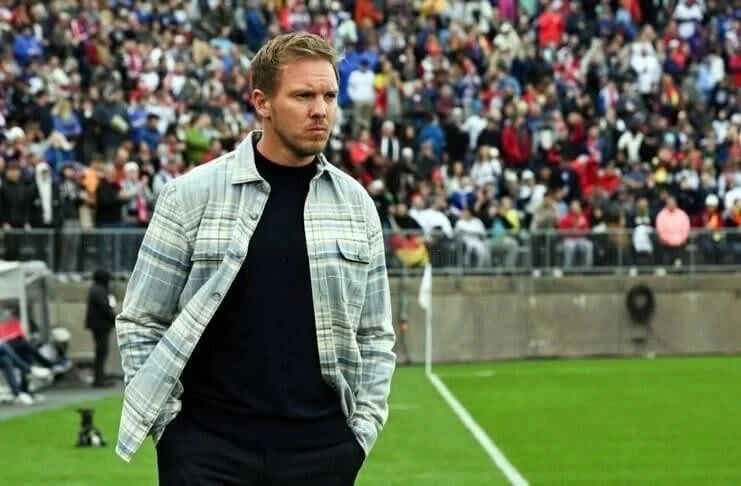
Now, their coach is Julian Nagelsmann. He wears sportswear (the “coach in jogging pants“ tradition made a comeback) and random t-shirts he probably found at the back of his closet. Germany lost 1:1 with 3:4 in the penalties against Paraguay.
Coincidence? I don‘t think so…
Photos: Pinterest
The Halftime Show
This year was the first world cup ever to have a halftime show. There has been an opening ceremony (like Shakira in 2010 in South Africa with “Waka Waka“) and a closing ceremony, but never a halftime show, because the halftime break is max. 15 minutes long, so there was never enough time for stage construction. But this year they found a solution: every performer would be performing directly on the field for about 11 minutes, the break was then about 27 minutes long.
Madonna, with custom Swarovski-covered gloves and dressed in custom Saint Laurent: a purple sporty jacket, corset, silky shorts paired with lilac lace stockings and heavy boots, entered the field in a dune buggy, together with Ronaldo and Ronaldinho while singing “Music“. After, the K-Pop Boy Band BTS followed with chunky oversized leather jackets that look like they came straight from the F1- paddock, performing their song “Dynamite“. The opposite of “Dynamite“ came right after, presented by Ted Lasso Cast, Justin Bieber with “Everything Hallelujah“ which (no offence) kind of sounded like a long introduction to a piece with no point. The world-cup-song queen came after, performing “Dai Dai“ in custom Roberto Cavalli together with Burna Boy. Then there was a big surprise: the conductor Gustavo Dudamel performing “Seven Nation Army“ together with the Muppets/Sesame Street as orchestra. There was a real orchestra performing (poor celli had to play standing) but some of them looked like actors that don‘t know anything about the difference of a violin and viola. Closing the halftime show, a kids choir sang “Believe in Love“ from Coldplay, every performer was with them on the stage, singing.
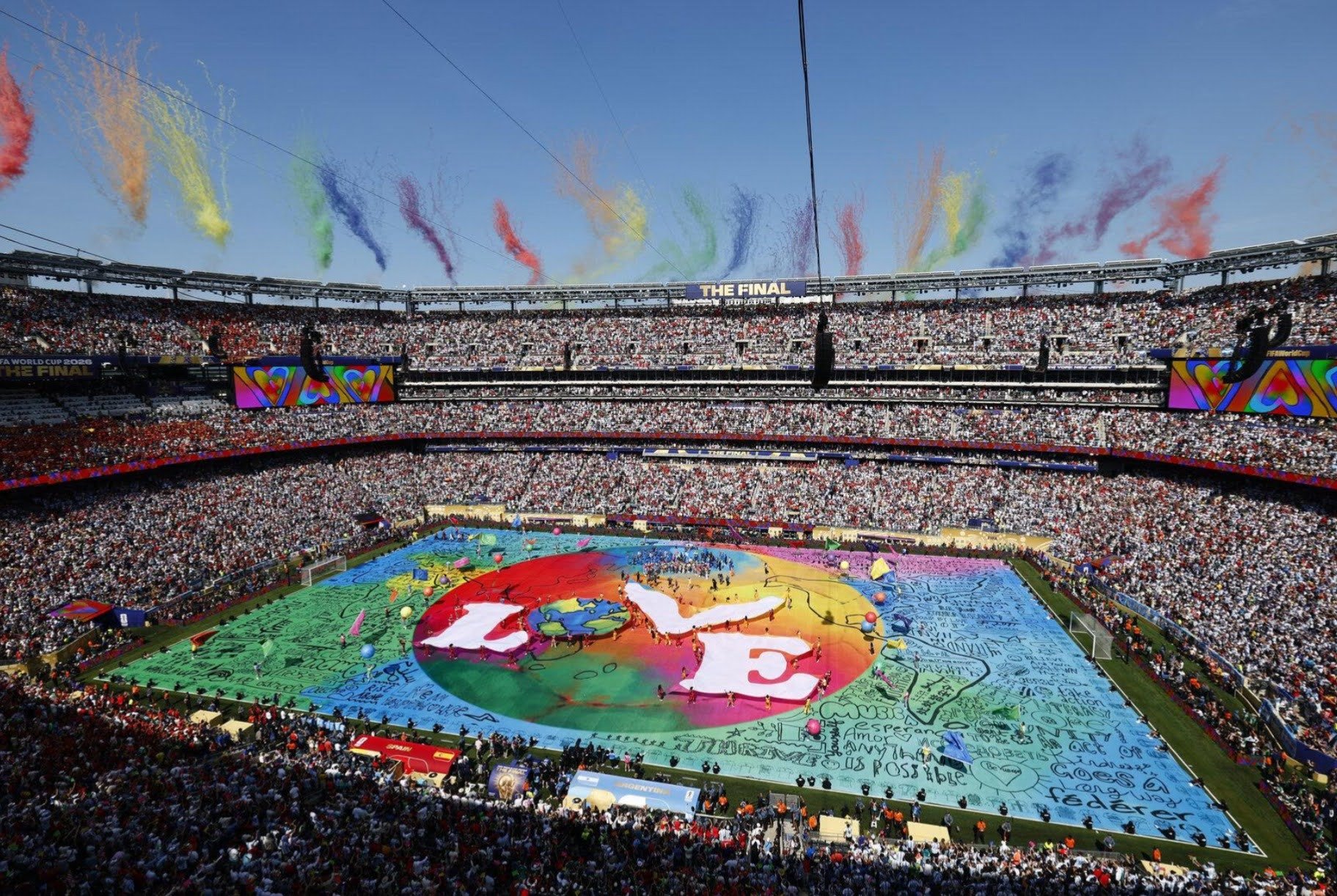
Photo: Kurier
Conspiracy Theories and VARgentina
So there is a pretty crazy conspiracy theory that FIFA planned and scripted all matches and that it‘s no coincidence that Argentina and Spain are in the final because Lionel Messi bathed Lamine Yamal when he was a baby in 2007 and Messi was then 19 years old and had the number 19 in FC Barcelona and Lamina Yamal is now 19 years old and has the number 19 in La Roja and the game is on July 19th and I don‘t know what else. Another theory is (which I think is more realistic) that FIFA wants Argentina to win the WC 2026, because first of all they should have gotten yellow and red cards but they didn‘t, even thought it was pretty obvious the fouled and cheated. Second of all, they got penalties and goals which other teams didn‘t. Third of all, it actually could be, because Messi is one of the most popular footballers and he sells good (kits, ads, etc) and FIFA probably wants to keep him as football icon. They kind of did the same with Portugal and Ronaldo, they let the players play much longer than they should (suspicious), but they lost 0:1 against Spain anyway.
Yeah, football is not weird at all.
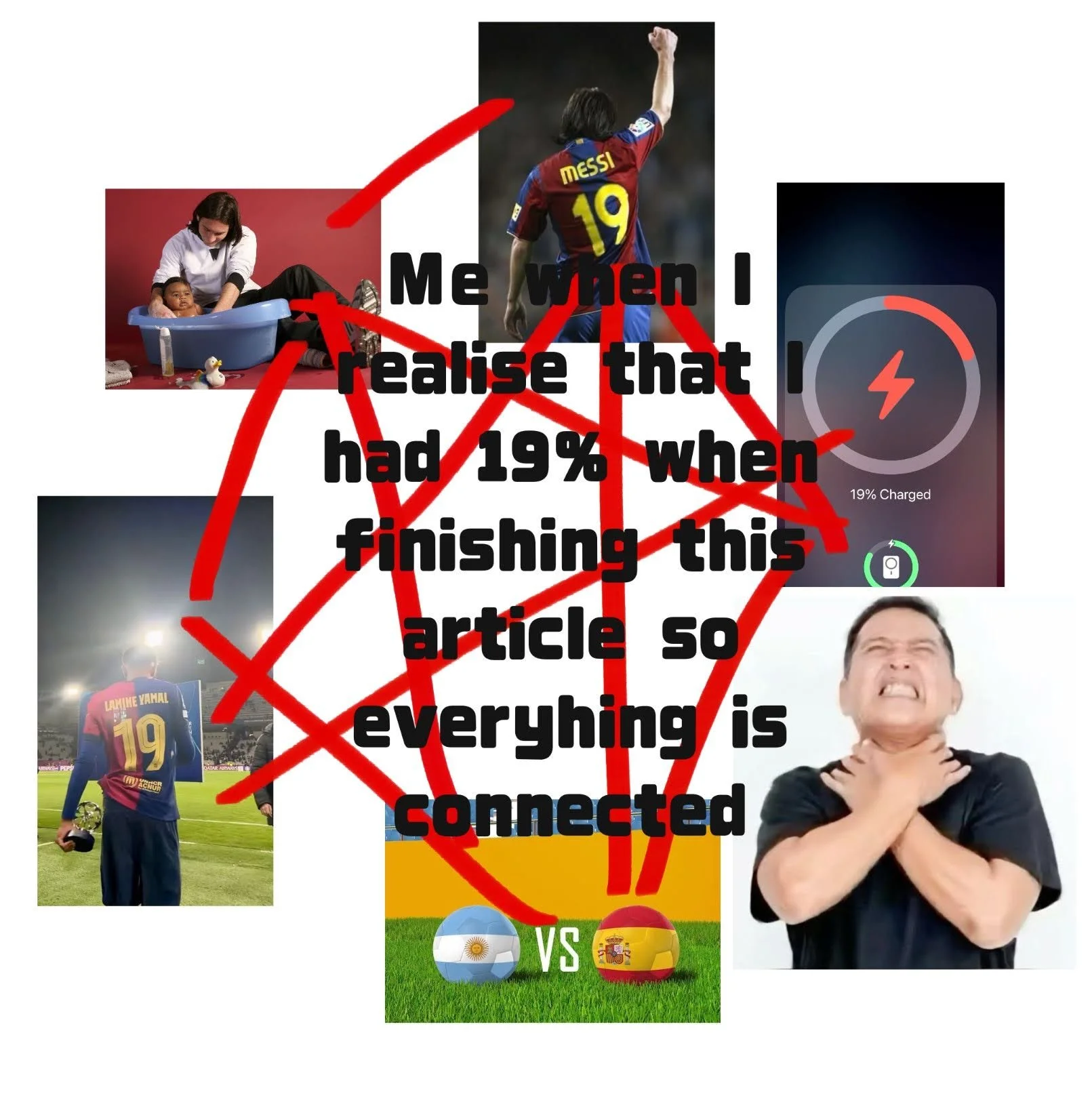
Photo: Pinterest
Gender-based violence and football
A lot of studies show that on mayor sport events the number of domestic violence increases. There are a lot more calls on the women‘s-help-hotline during the hours after the final whistle. One factor is for example the result of the game. British studies show that police-registered cases of domestic violence increase 26% after victory of the national team and 38% after defeat. Excessive and often early-onset alcohol consumption is considered a primary aggravating factor. For matches held in the afternoon or early evening, perpetrators have more time to continue drinking after the final whistle, which maximizes the risk of violent escalation in the hours that follow, often 10-12 hours later. It‘s not the football itself which generates violence, it acts as a trigger when combined with toxic gender roles, alcohol consumption that lowers inhibitions, frustration, or excessive expectations. A report by UN Women and UNESCO shows, for example, that police reports of domestic violence worldwide increase by an average of more than a third during major sporting events such as the football World Cup.
But why doesn‘t FIFA do something against it or any mayor sports organization?
There is no answer to that without cursing.
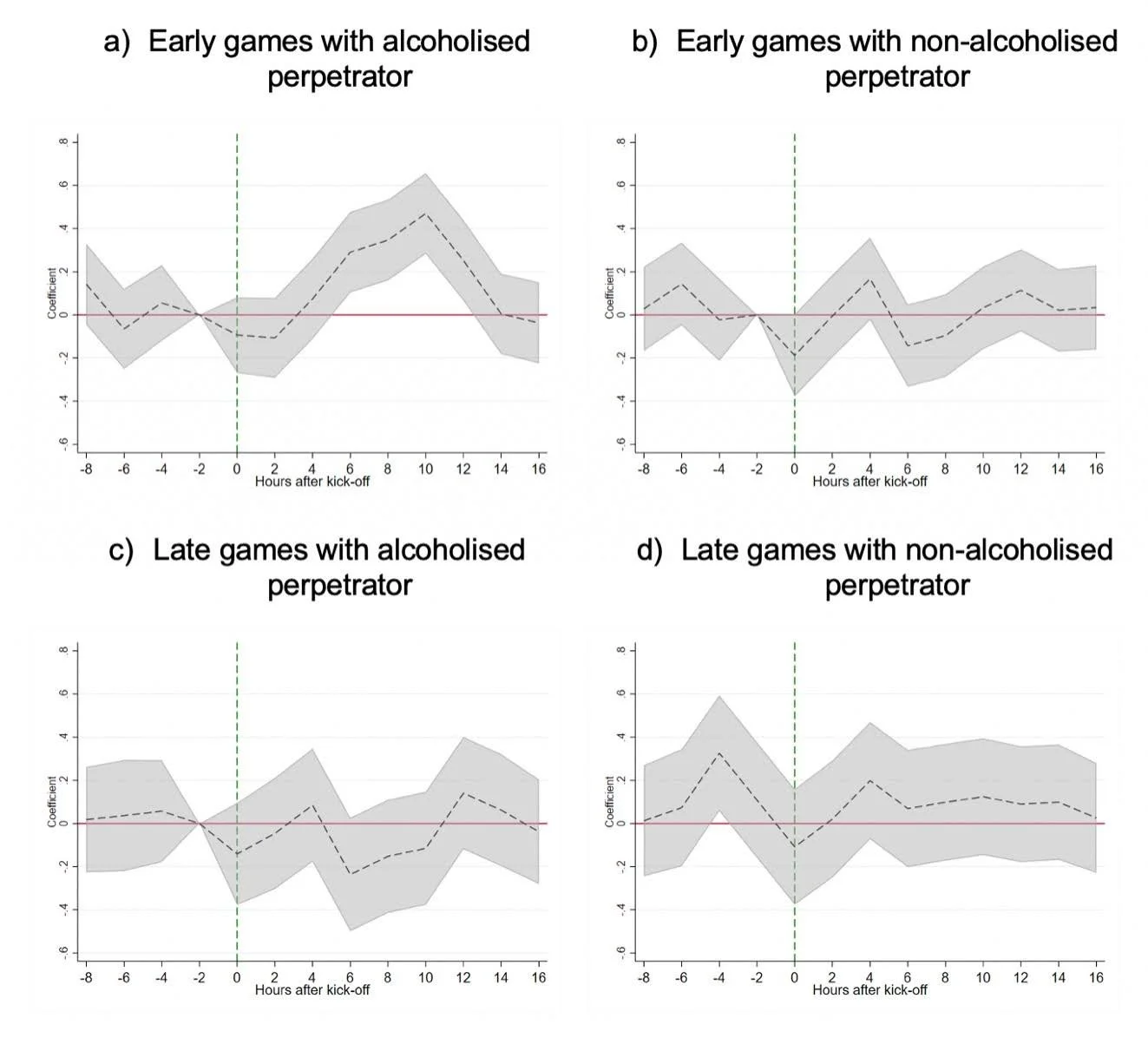
Photo: LSE Blogs
XOXO, The Fashion Stock Market