Who is the problem?
On August 31, the Metropolitan Museum of Art and John Galliano announced that John Galliano: Horizons, an exhibition that was scheduled to open in May 2027 and serve as the centerpiece of the following Met Gala, would not go ahead as planned. The decision came after weeks of criticism over the museum's choice to dedicate its Costume Institute exhibition to a designer whose career was derailed in 2011 after the circulation of videos in which he made antisemitic and racist remarks. Galliano was subsequently convicted in Paris over the antisemitic comments.
The cancellation raises a question that extends beyond John Galliano and beyond the familiar debate surrounding "cancel culture": what happens when an industry separates the work of an artist from the person who created it?
Galliano is not the first controversial figure to continue finding space within fashion after serious allegations or offensive conduct. Nor is he likely to be the last. His case exposes a recurring contradiction within the industry: fashion can publicly condemn an individual while continuing to create the conditions that allow their careers, brands and cultural influence to survive.
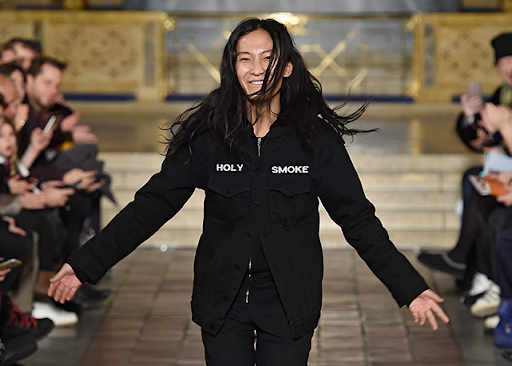
Photo: Google
The Groping Designer
In 2020, allegations of sexual misconduct against American designer Alexander Wang became public after model Owen Mooney described an alleged incident involving Wang at a New York nightclub in 2017. Following Mooney's account, other people came forward with additional allegations of unwanted touching and sexual misconduct. Wang initially denied the allegations, describing them as false and fabricated.
In March 2021, however, Wang issued a new statement saying he supported the right of people to come forward and that he had listened to their accounts. He subsequently met privately with some of his accusers, with attorney Lisa Bloom involved in representing them.
The controversy did not permanently remove Wang from the fashion system. In April 2022, he staged a runway show in Los Angeles, marking what Vogue described as a comeback after the allegations. The show demonstrated how quickly a fashion career can begin rebuilding itself even after a public scandal.
The point is not to equate Wang's case with Galliano's. The allegations and circumstances surrounding each are different. What connects them is what happened afterward: the possibility of returning to the industry remained open.
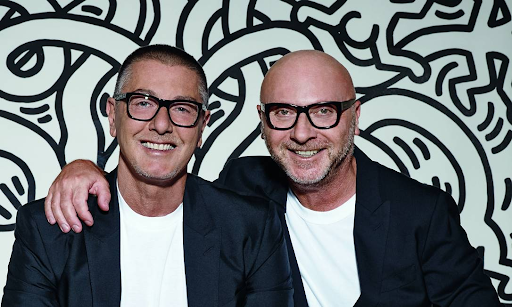
Photo: Google
The Designers Who Spoke Too Much About Too Little
Domenico Dolce and Stefano Gabbana provide another example of how fashion's relationship with controversy can change over time.
In 2015, the designers faced an international boycott after comments criticizing in-vitro fertilization and same-sex families. Elton John, whose children were born through IVF, publicly called for a boycott of the brand.
Three years later, Dolce & Gabbana faced another major backlash. A campaign promoting a Shanghai fashion show depicted a Chinese woman attempting to eat Italian food with chopsticks. The advertisements were widely criticized as racist and culturally insensitive, and the controversy intensified after screenshots of messages attributed to Stefano Gabbana containing derogatory comments about China circulated online. The brand said that the account had been hacked. The Shanghai show was subsequently canceled, and Chinese retailers removed the brand from their platforms.
Yet the existence of controversy did not mean the end of Dolce & Gabbana.
This is an important distinction. A boycott can create economic and reputational consequences without permanently removing a brand from the fashion system. A scandal can become part of a company's history rather than the end of its history.
And fashion has a remarkably long memory when it comes to aesthetics—and a surprisingly short one when it comes to accountability.
The Galliano Before Galliano
Long before Galliano became the center of this debate, another fashion icon demonstrated the complicated relationship between artistic legacy and personal history.
Coco Chanel's relationship with Nazi Germany during the Second World War has been extensively documented and debated. Journalist Hal Vaughan's 2011 biography Sleeping with the Enemy: Coco Chanel's Secret War, based on archival material, argued that Chanel was registered as an Abwehr agent under the code name "Westminster" and participated in activities connected to German intelligence. The book also examined her attempt to use France's antisemitic "Aryanization" laws to regain control of her perfume business from the Jewish Wertheimer family.
The precise interpretation of Chanel's role has been disputed. The Chanel company questioned some of Vaughan's conclusions, while other historians and archival researchers have supported significant parts of his account.
But regardless of how every aspect of Chanel's wartime activities is interpreted, her case demonstrates something fundamental about fashion's relationship with historical memory: a designer's cultural influence can become so enormous that the work begins to exist independently of the person who created it.
Chanel remains one of the most influential names in fashion. Her wartime history has not erased the brand's cultural significance or prevented it from becoming one of the world's most recognizable luxury houses.
Who Is the Actual Problem?
John Galliano's cancellation may therefore be significant, but it is difficult to understand it as an isolated event.
The designer's history was not unknown when the Met announced John Galliano: Horizons. His 2011 conviction and the circumstances surrounding it had been part of his public biography for more than a decade.
His career also did not end permanently after the scandal. After leaving Dior, Galliano eventually returned to fashion and became creative director of Maison Margiela, where his work was again celebrated by critics and the industry.
That history makes the Met's decision more complicated than a simple story of an institution discovering a problematic past. The industry knew. It remembered. It debated. And, for years, it continued to make room for him.
That is where the larger question emerges.
Who is the problem?
Is it Galliano? Alexander Wang? Dolce & Gabbana? Coco Chanel?
Or is the problem an industry capable of turning almost anything into part of an artist's mythology?
Fashion is particularly vulnerable to this because it has always cultivated the idea of the difficult genius: the brilliant designer whose personality, excesses and contradictions become part of the legend surrounding their work.
Talent becomes an excuse.
Success becomes evidence of importance.
And controversy becomes another chapter in the biography.
The danger is that this logic can transform accountability into a temporary interruption. A designer is condemned when the scandal is fresh, removed when public pressure becomes impossible to ignore, and eventually welcomed back when the economic or cultural value of their work becomes attractive again.
The Galliano case forces the industry to confront that cycle. His exhibition was not canceled because his creative achievements suddenly disappeared. The Met's own original announcement had described him as one of the most inventive and influential designers of the past four decades.
The problem, then, is not whether Galliano is talented.
He is.
The problem is what an institution chooses to do with that talent—and what it communicates when it decides that talent is important enough to be celebrated publicly despite everything that came before.
Perhaps Galliano should not have been the subject of a Met exhibition. Perhaps the decision to cancel the exhibition was the appropriate response to the controversy surrounding it. But stopping at one designer makes the problem comfortably small.
The fashion industry does not have a John Galliano problem.
It has a system problem.
It is an industry that can elevate individuals to the status of genius, build entire brands around their names, excuse behavior while it remains commercially convenient, condemn them when the cost of defending them becomes too high, and eventually rehabilitate them when their cultural or financial value returns.
The question should therefore not only be who deserves to be canceled?
It should be why does the industry keep needing to cancel the same people in the first place?
Because if the system remains unchanged, removing one name from one exhibition does not solve the problem.
It only changes the name.
XOXO, The Fashion Stock Market