When did getting dressed stop being fun?
As trend cycles continue to accelerate, keeping up with them has become increasingly exhausting. This led to understated wear becoming staples, because they blend in seamlessly with every era of fashion. Dressing well started to become about dressing safely, picking the clothes that are most unlikely to stand out or age poorly. But when did we start dressing for fitting in instead of what we actually love?
Two decades ago, the beloved 2000s fashion was the peak of maximalism; bold colors, prints and extreme logo dressing. It was heavily shaped by celebrity culture and embraced playful materials and patterns. While the 00s had its faults, the 20s have been the years of nostalgia, and fashion has largely consisted of trying to revive the 00s. Ironically, the revival of Y2K fashion has stayed mostly aesthetic, while everyday dressing still plays it safe. Unfortunately, we forgot that what made the 2000s visually chaotic was not just the clothes themselves, but the confidence of standing out.
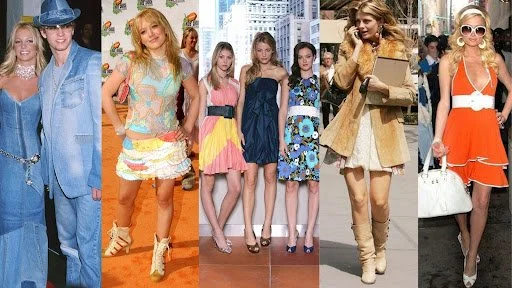
Celebrity looks from the 00s
Photo: Getty Images and Pinterest
Over the past decade, everyday fashion has been increasingly shaped by investment pieces and capsule wardrobes: a closet built around basic and interchangeable pieces, neutral colors, repeatable silhouettes. This approach promised way more outfits with way less clothes, minimal effort, and a long lasting sustainability. By buying clothing that was always acceptable in everyday fashion, we said goodbye to decision fatigue and “having nothing to wear.”
Instead, we welcomed the same basic t-shirts in four different colors (black, white, navy, and brown) and the simplest coats in every nude shade possible. The issue is that the idea of “less is more” in fashion did not just simplify closets; it set a standard for everyday dressing. Basics became the uniform, and the goal of dressing shifted from expression to remaining neutral.
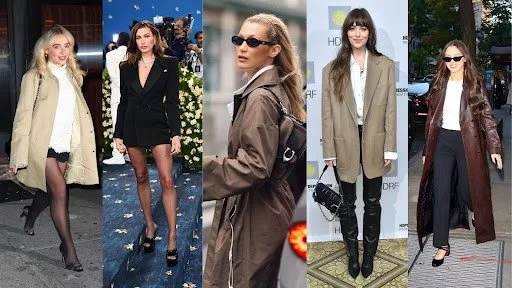
Celebrity looks from the 20s
Photo: Getty Images and Pinterest
Minimalism is defined by restraint, simplicity, and neutrality. On the other hand, maximalism —grown rival to minimalism— reinforces layering, excessiveness, and vibrance. When fashion started drifting into minimalism, it became less risky; anything eye-catching was too much. Boldness disappeared into the past, because dressing was more about control than freedom. Now we all have the same muted color palette dominating our closets and silhouettes so familiar that dressing feels like a dress code. The visual monotony feels lifeless and clashes with the idea of fashion as a form of art and a tool for expression.
That said, the uniform of basics and minimalism is justifiable in the sense of sustainability and consumerism, promoting intentional shopping habits. Still, it is an undeniable fact that this approach downplays the meaning of fashion by losing the core idea of making a statement. And if we don’t be a little bold about it, are we even using fashion as it was intended to be?
Clothing exists to be expressive, creative, and personal. It is one of the few everyday choices that allows us to communicate who we are, freely and visibly. Attachment to basics and sameness in the name of timelessness only costs us personality and the perks of using fashion as a tool. In a world that takes itself very seriously, the least we can do is allow ourselves a little joy in the way we dress.
XOXO, The Fashion Stock Market
Cover Photo: Pinterest
Editor: Felicity Field