How the Middle East Influences Us
The influence of the Middle East on Western fashion is a dynamic phenomenon, one that continuously blends millennial traditions with contemporary trends. It is no surprise that the West draws inspiration from this region: the Middle East is known as the Cradle of Civilization, and its cultural legacy remains deeply embedded in how fashion evolves today.
The MENA Aesthetic and Its Distinct Elements
The aesthetic of the Middle East and North Africa (MENA) is profoundly tied to a long history of craft and culture. In contrast to Western fashion — which often prioritizes minimalism and silhouettes designed to fit and mold the body — Middle Eastern fashion favors fluidity and less defined shapes. Here, clothing moves with the body rather than constraining it.
Several elements of this aesthetic have directly influenced Western design:
Intricate embroidery and beading, often used to elevate simple garment constructions
Luxurious fabrics and vibrant colors, frequently combining multiple textures and patterns within a single piece
Iconic garments, such as the salwar (wide trousers), which inspired American bloomers and modern harem pants; the abaya (a loose dress), later reinterpreted in the West as flowing blouses worn with leggings; and the turban, which became a popular headpiece in the 1940s
These elements highlight a fashion language rooted in decoration, symbolism, and craftsmanship.
Historical Context and Orientalism
Western fascination with Eastern silhouettes and textiles is not a recent development. The concept of Orientalism in fashion describes how Eastern ideas and aesthetics were absorbed and reinterpreted by the West. This process was shaped by trade routes in the 17th century, colonial encounters in the 19th century, and global cultural exchange throughout the 20th century.
Historical exhibitions, including those held at the Metropolitan Museum of Art, document how the Islamic world influenced Western fashion through textiles, new silhouettes, and even concepts of domestic interiors. Designers such as Giorgio Armani created collections inspired by North Africa, while Jean-Paul Gaultier drew from Eastern aesthetics in his haute couture work.
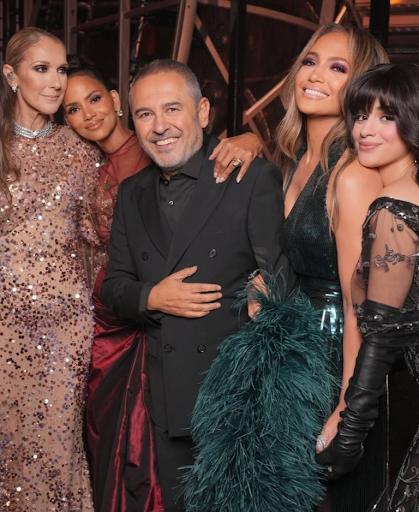
Ellie Saab
Photo: Harpers Bazaar
Fusion Designers and Modernity
In contemporary fashion, designers from the MENA region are gaining international recognition by synthesizing traditional elements with modern Western tailoring. This approach allows cultural heritage to remain present while becoming accessible to a global audience.
Elie Saab, a Lebanese designer, exemplifies this fusion by incorporating Middle Eastern embroidery into evening gowns that appeal to Western luxury markets.
Huda Al Nuaimi reinterprets traditional motifs in modern contexts, using Western garment structures as a foundation for Eastern craftsmanship.
This synthesis demonstrates how tradition and modernity can coexist without one overshadowing the other.
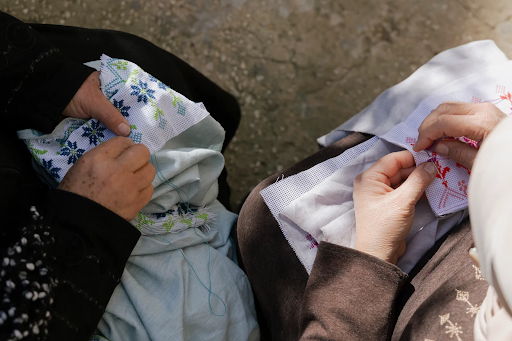
Photo: Nöl Collective/Vogue Arabia
Cultural Sensitivity and Balance
A central challenge within this exchange is balance. Designers must carefully navigate the space between tradition and innovation. Emphasizing one too heavily can alienate audiences seeking either cultural authenticity or contemporary relevance. Cultural sensitivity is essential to avoid the appropriation or trivialization of sacred or historically significant elements.
Technology and the Future of Fusion Fashion
Globalization and technological advances have accelerated cultural exchange in fashion. Digital platforms such as Instagram and Pinterest play an educational role, allowing designers to communicate the cultural depth behind their collections to a global audience.
This fusion reflects a broader movement toward a more inclusive fashion industry — one that values cultural uniqueness while embracing modernity. Rather than erasing differences, this approach promotes intercultural understanding and dialogue through design.
XOXO, The Fashion Stock Market