The Performative Man: Wearing His Gender on His Sleeve
In Judith Butler’s Gender Trouble: Feminism and the Subversion of Identity (1990), she first coined the term “performative man.” To Butler, gender performance is the process by which people “do” gender through repeated behaviors that society and media read as masculine or feminine. Gender is not an inherent role from sex, but like a script we learn, rehearse, and perform through the clothes we wear, the way we speak.
The 2025 “performative man”—dressed in vintage clothing and armed with feminist literature, a tote bag, and a matcha latte—raises the question of whether this mocking trend represents progress in dismantling gender norms, or reinforces them.
Despite being associated with femininity, the performative man often dresses in traditionally masculine clothing in his baggy jeans, a simple graphic tee, and a plaid button-down. In Butler’s terms, his masculinity is still being performed, just curated differently. Instead of performing for other men, he performs for the “female gaze.”
He supposedly doesn’t actually read but pretends to. He doesn’t genuinely enjoy listening to Clario or Bebadoobee but pretends to. Yet, as Butler argues, in a world where gender itself is constructed, everyone is always pretending—both the performative man and the supposedly non-performative man alike.

Photo: The Amherst Student
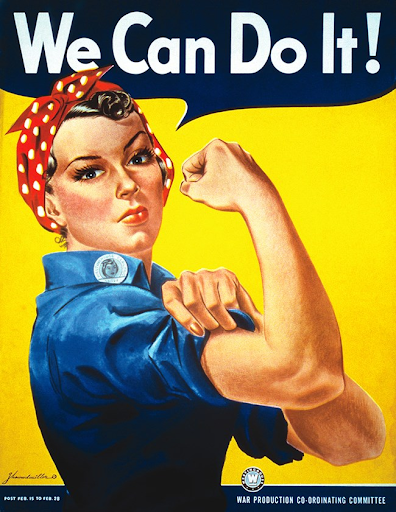
Even though clothing is always a performance, “gender-bending” in fashion has repeatedly pushed society to rewrite the boundaries of gender. For instance, Rosie the Riveter’s image was a government-crafted performance to persuade women to take on industrial wartime labor. Her image blended masculinity and femininity: denim and work pants paired with makeup and a neatly tied bandana.
She embodied masculine labor while remaining visually palatable to the male gaze. While this image was neither fully inclusive nor free from catering to men, it still normalized pants in women’s fashion after the war, from capri pants in the 50s to pedal-pushers in the 60s, to bell-bottoms in the 70s.
Clothing as a performance has the power to rewrite gender norms, but the online mockery of the performative man instead turns this performance into a spectacle rather than progress. If we want fashion to genuinely expand gender possibilities, we need to stop performing for others—or judging others' performance—and performing for ourselves.
XOXO, The Fashion Stock Market
Cover Photo: McGill Daily