When Our Bodies Become "Fashion": The Morally Gray Area of Body Shockers and Plastic Surgery
In 2018, the United Kingdom banned cosmetic procedures that remove customers’ ears and nipples and split their tongues to resemble a reptile, drawing a legal line around how far one’s body may be altered by choice. Individuals who undergo such alterations are often grouped under the term “body shockers” or “body mods.” Far beyond traditional piercings or tattoos, extreme body modification includes practices such as saline injections, corset piercings, eyeball tattooing, and surgically sculpted elfin ears.
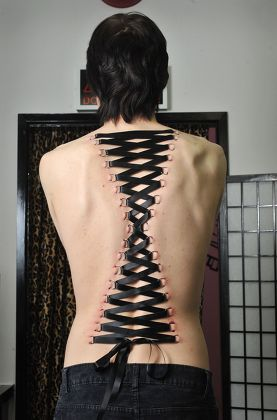
Photo: Marshu
Yet many other elective cosmetic procedures—nose jobs, breast augmentation, and lip filler—remain widely accepted, regulated, and even encouraged. Both extreme body modification and plastic surgery involve irreversible changes to the body. Still, they are judged through vastly different cultural and ethical frameworks, privileging alterations that align with conventional beauty standards while pathologizing those who resist them. This contrast raises a central question: within the morally gray terrain of cosmetic alteration, what distinguishes plastic surgery from body modification—and are either, or both, ethically justifiable?
Pros of Body Modification and Plastic Surgery
By permitting some elective procedures while criminalizing or restricting others, the state implicitly defines the limits of personal control over the body
They are tools for expressing identity and can combat body dysmorphia. Plastic surgery often aims to align the body with socially accepted ideals, while body modification may intentionally reject those ideals, using the body as a visible statement of personal philosophy.
Cons of Body Modification and Plastic Surgery
Can be driven by societal pressures, whether that pressure comes from mainstream beauty standards or alternative communities. Although societal pressure doesn’t negate consent, it complicates the fact that these choices are made in complete isolation
There are many medical risks involved. In plastic surgery, 15% of patients experience nerve damage in breast augmentation surgeries, 15-30% of tummy tuck patients get seromas (pockets of serum that develop under the skin), and liposuction can pose severe risks to internal organs. More extremely, in body modifications, tongue splitting can result in breathing difficulty, and eyeball tattooing can result in blindness.
Plastic surgery, particularly rhinoplasty, has historically been used to minimize or erase ethnic features to conform to Eurocentric beauty standards. At the same time, certain body modification practices, like ear stretching and māori moko tattoos, risk becoming forms of cultural appropriation that are rooted in Indigenous traditions
So, to what extent does body modification toe the line between daring and comforting? These procedures have spanned over decades, raising questions of ethics and legitimacy. What do you think, are corset piercings on the same level as a breast augmentation? The government would agree to disagree.
XOXO, The Fashion Stock Market