Rio Fashion Week 2026: Where Carnival Meets Couture
Once absent from the spotlight, Rio de Janeiro has reclaimed its place on the fashion map. After years away from the calendar, Rio Fashion Week 2026 returned not quietly, but with intention, transforming the iconic Pier Mauá into a living, breathing ecosystem of Brazilian creativity.
From April 15 to 18, the city didn’t just host a fashion event, it staged a cultural revival.
A Runway Beyond the Runway.
Set against the industrial architecture of the port region, Rio Fashion Week expanded far beyond traditional catwalks. The event occupied multiple warehouses, turning them into a 35,000-square-meter creative hub filled with fashion shows, exhibitions, music, gastronomy, and immersive experiences.
The concept was clear: fashion is no longer isolated. It is lived, experienced, and shared.
The scenography, built around the theme “Amanhecer” (Dawn), reflected this shift. Metallic structures and reflective surfaces interacted with natural light, creating a dynamic environment that evolved throughout the day, much like the city itself.
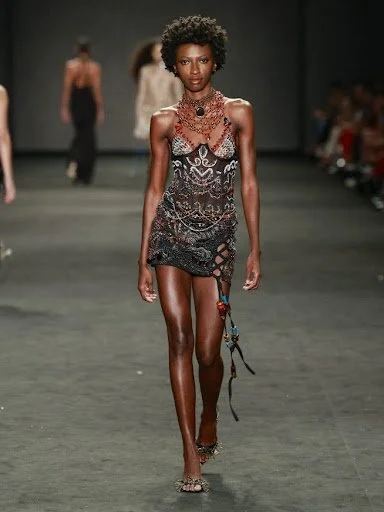
Photo: ffw.com.br
Carnival as High Fashion
Perhaps the most defining statement of the season came not from the runway, but from an exhibition: “A Alta Costura do Carnaval.”
For decades, carnival costumes have existed in a paradox, they are globally admired, yet rarely classified as haute couture. Rio Fashion Week challenged that narrative head-on. Featuring around 50 elaborate looks worn by Brazilian icons, the exhibition reframed carnival craftsmanship as a legitimate form of high fashion.
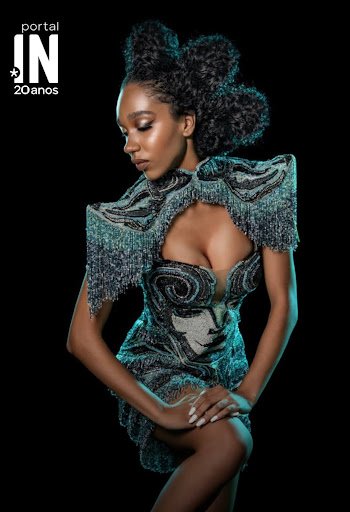
Photo: Instagram
Feathers, crystals, and architectural headpieces stood not as spectacle, but as design.
In doing so, the event made a bold argument: Brazilian fashion does not need to imitate Paris or Milan to be taken seriously. Its identity — rooted in performance, movement, and excess — is already couture.
The Return of a Fashion Capital
Rio Fashion Week also marked something larger: a strategic repositioning of the city itself.
Backed by institutions and integrated into the broader cultural calendar, the event is part of a long-term effort to establish Rio as a year-round destination for creative industries.
And the impact is tangible. The influx of designers, influencers, press, and visitors not only elevates visibility but fuels the local economy, from hospitality to independent fashion businesses.
Where Fashion Meets Experience
Unlike the rigid structure of traditional fashion weeks, Rio embraced fluidity.
Talks, workshops, and installations blurred the line between audience and creator. Educational spaces hosted by institutions like Senac connected emerging designers with industry professionals, reinforcing the idea that fashion is both art and ecosystem.
The Rio Aesthetic: Sensual, Cultural, Unapologetic
If there is a defining aesthetic of Rio Fashion Week 2026, it lies in its refusal to simplify itself.
There is sensuality — in silhouettes that move with the body.
There is culture — in references to samba, carnival, and coastal life.
And there is confidence, in embracing excess where others might choose restraint.
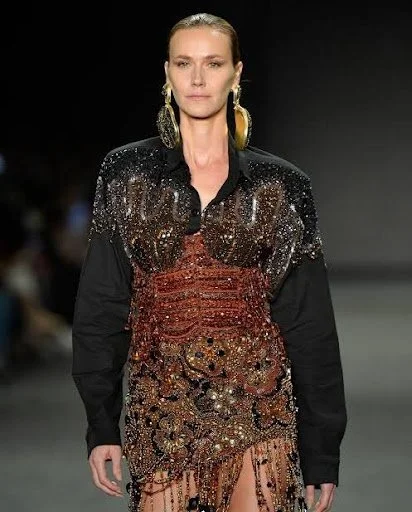
Photo: Instagram
A New Chapter for Brazilian Fashion
Rio Fashion Week’s return signals more than nostalgia for past editions like Fashion Rio, it represents evolution.
Today’s event is not just about showcasing collections; it is about positioning Brazilian fashion within a global conversation, on its own terms.
It acknowledges that fashion is no longer dictated by a single capital, but shaped by multiple voices, cultures, and perspectives.
And in 2026, Rio’s voice is impossible to ignore.
The Future: Sunlight, Not Spotlight
If Paris is about legacy and Milan about luxury, Rio is about energy.
Its fashion does not exist under artificial lights alone, it thrives in sunlight, in movement, in music. Rio Fashion Week 2026 proved that the city’s greatest strength is not imitation, but authenticity.
XOXO, The Fashion Stock Market