“Green capitalism” is a fairytale. Since the rise of environmental consciousness in the 1970s, marketing buzzwords like “sustainability” and “eco-friendly” have dominated the fashion industry. These terms aren’t meaningful commitments, but insincere promises, designed to entice consumers and ease the guilt of purchasing new clothes they do not need.
Green capitalism, also known as eco-capitalism, is an economic theory that claims profit and environmental responsibility can be aligned. In the fashion industry, this logic manifests through slow fashion, conscious collections, and recycled materials. However, this framework overlooks fundamental contradictions within an industry built on constant growth and overproduction.
H&M exemplifies this discrepancy. In 2013, the company launched its Garment Collecting initiative, encouraging customers to donate old clothing to be recycled and repurposed. In reality, only a small percentage of the collected clothing was actually reconditioned into new clothing, while the majority was downcycled into polluting insulation or simply shipped off to other countries. Framed as environmental consciousness, the initiative ultimately served to legitimize continued mass consumption.
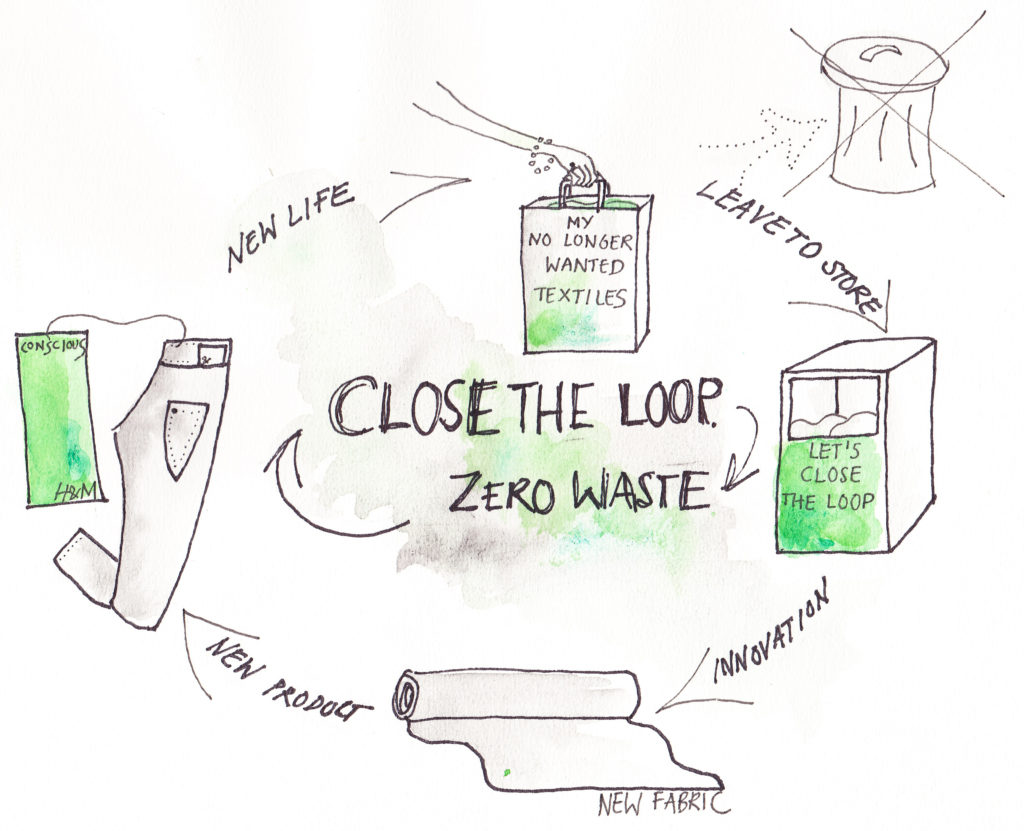
Photo: H&M Group
Even brands that genuinely attempt to practice “sustainable” fashion fail to offer a universal solution. The higher price points of slow fashion make sense: cotton is 25% more expensive than polyester, ethical labor implies workers' higher salaries, and smaller production volume affords less efficient cost reduction. However, at the same time, these price points render sustainability a privilege rather than a right, accessible primarily to wealthier consumers. When ethical consumption is the only mainstream path to sustainability, responsibility is shifted onto individuals while cooperatives remain structurally unchanged.
Green capitalism does not resolve the environmental crisis of fashion—it disguises it. We can never have green capitalism because capitalism is the problem. It destroys our environment, even if it’s “sustainably made.” While the average jeans last 2-5 years, it still takes 3,000 to 4,000 liters of water to make a single pair of jeans. Any online brand or second-hand company, like Depop, contributes to 10% of the global carbon emissions annually produced by the fashion industry. The solution to fashion’s environmental crisis is not “eco-conscious” consumption, but less consumption altogether—prioritizing repair, reuse, and local in-person thrifting, where up to 75% of the donated clothes are eventually tossed in the landfill. As the climate clock continues to run out, real change requires refusing the illusion that capitalism can save the crisis it created.
XOXO, The Fashion Stock Market