The Evolution of Class through Paris Fashion
Paris has long been synonymous with fashion. As the global center of luxury—home to Chanel, Hermès, Dior, and more)—and the host of fashion week’s finale, Paris, represents the pinnacle of high fashion, a world often associated with exclusivity rather than accessibility. Yet this hierarchy, rooted in fashion, is nothing new. Rather, it began to take place centuries ago.
During Louis XIV’s reign (1643-1715), his absolutist leadership was extended into aesthetic management as a means of controlling the nobles. He required that nobles at Versailles wear distinct outfits for specific occasions, such as operas, balls, and banquets.
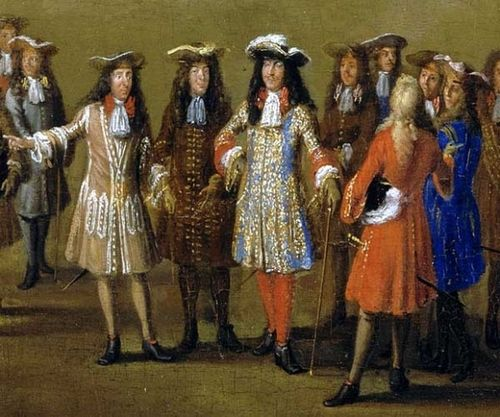
Photo: Marina’s Discoveries
Not only was the result expensive, but as the prominent Noble Saint-Simon described, “he [Louis XIV] compelled his courtiers to live beyond their income, and gradually reduced them to depend on his bounty for the means of subsistence.” Transforming luxury into an obligation among nobles, Louis XIV ensured that nobles remained socially subordinate to him, reinforcing social hierarchy and reorganizing hierarchy within the elite themselves.
By the nineteenth century, however, fashion in Paris began to serve a second and seemingly contradictory role: enabling new forms of social mobility. Although the modernization of Paris (1853-1870) under Georges-Eugène Haussmann segregated classes more amongst the city—wealthier Parisians lived in the center while the poorer were pushed to the outskirts—the rise of French department stores allowed for new cross-class spaces.
In Émile Zola’s The Ladies’ Paradise (set in 1860s Paris), Madame Desforges, a widowed bourgeoise shopper, illustrates this dynamic as she navigates the store’s vast departments, moving among a “crowd of very mixed elements…among shopkeepers and housewives…both dark and fair,” all participating in the same commercial space.
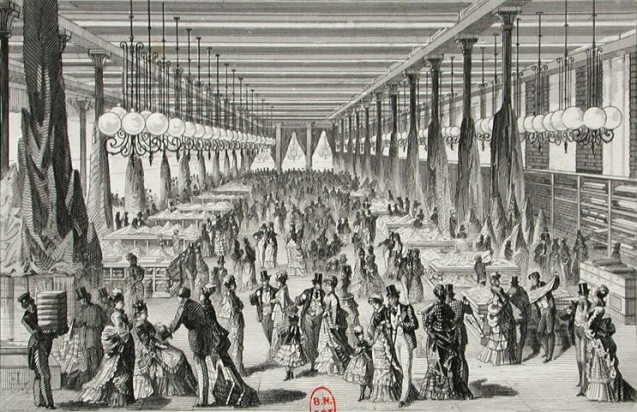
Photo: Napoleon.org
Though a fictional account, The Ladies’ Paradise is insightful in understanding how Parisians living in the 1860s, like Zola, first-hand experienced consumer culture redeveloping. And through Madame Desforges, readers can see that department stores brought together diverse and typically separated social groups—“shopkeepers and housewives” and “the dark and fair”—by providing a shared space for consumption.
Today, this tension remains central, as modern fashion continues to balance exclusivity and accessibility—preserving status through luxury while simultaneously expanding participation through global consumer culture.
XOXO, The Fashion Stock Market