4 Iconic Film Looks and What Makes Them Unforgettable
If you’re asked to picture a black dress paired with pearls, the image arrives instantly: Audrey Hepburn in Breakfast at Tiffany’s. Mention Clueless, and the yellow plaid set appears just as quickly: Cher Horowitz dressed by confidence, color, and the fantasy of an outfit monitor we all wish we had. Some movie looks outlive their plots, their characters, and even their scenes. They embed themselves so deeply into cultural memory that they become inseparable from the films they belong to. Across decades of cinema, only a select few outfits have achieved this rare status: recognizable without context, endlessly referenced, and culturally intact. More than styling choices, they are moments where fashion becomes narrative. This article looks at some of those unforgettable outfits from films we know by heart.
1) Holly’s Black Dress - Breakfast at Tiffany’s (1961)
Breakfast at Tiffany’s opens with Holly Golightly, played by Audrey Hepburn, stepping out of a taxi on Fifth Avenue in a black, floor-length gown, with layers of dainty pearls resting at her neck. She eats a croissant and sips her coffee outside Tiffany & Co. as the opening credits roll. There is no dialogue, just her performing a simple, everyday ritual, accompanied by the soft melody of Moon River. The screen time of the dress lasts less than three minutes, yet its impact has endured for decades. Search Breakfast at Tiffany’s on any platform today, and the image of Audrey Hepburn as Holly in what is arguably the most famous black dress in cinema will flood your screen. What makes this look so inseparable from the film, despite its very brief appearance?
The black satin gown is from Hubert de Givenchy’s fall 1960 haute couture collection, has a high bateau neck, and a slim silhouette. It is paired with layers of pearl necklaces that are almost like a part of the dress, an elegant updo hair, oversized sunglasses, and elbow-length black gloves. The overall effect is precise and understated, indicating an effortless elegance rather than excessiveness.
With its repeated appearances in photoshoots for the movie as well as its poster, the look instantly became inseparable from both the film and Audrey’s screen persona. The contrast of the scene and the outfit represents Holly’s aspirational self-image. Her appearance is very polished despite her ordinary actions –eating breakfast on the street while looking at jewellery– suggesting that she uses glamour and elegance performatively, a way of imposing beauty and order onto an otherwise uncertain inner world.
The opening scene of Breakfast at Tiffany’s transformed the black dress into a symbol of timeless elegance and aspiration. More than a costume, the look elevated fashion into narrative, becoming a visual shorthand for the film itself. Even after over six decades, the silhouette alone is enough to signal Breakfast at Tiffany’s.
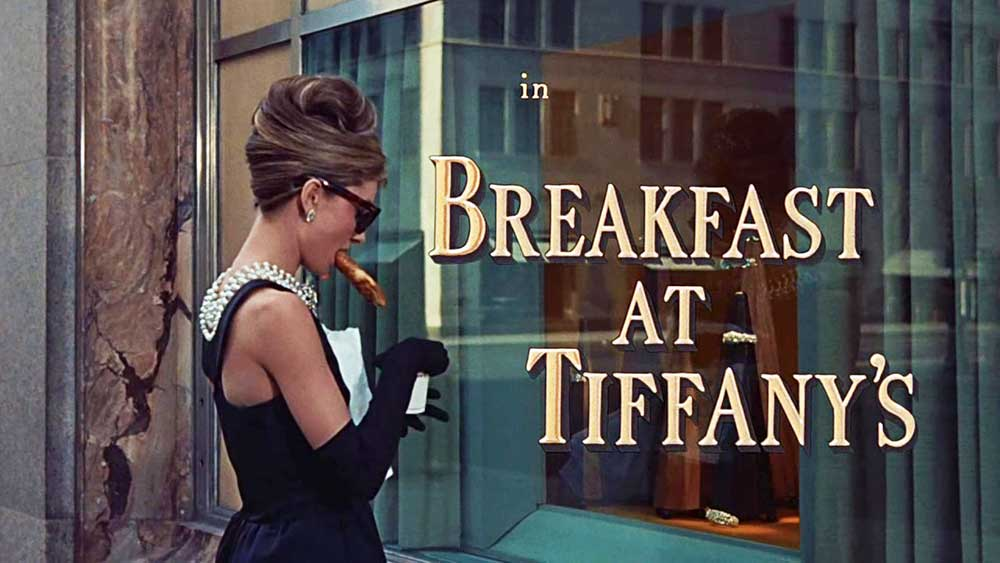
Audrey Hepburn as Holly Golightly in the opening scene of Breakfast at Tiffany’s, 1961
Photo: Breakfast at Tiffany’s (1961)
2) Cher’s Plaid Set - Clueless (1995)
Similar to Holly’s dress, Cher Horowitz’s yellow plaid set appears within the first minutes of Clueless, worn during the film’s opening high school scene. As the first outfit Cher selects—presented almost as a ritual within her carefully curated morning routine—it immediately gives hints about her character before the audience knows much about her inner life. Through clothing alone, Cher’s taste, influence, and social authority are established from the beginning.
The look consists of a matching plaid skirt and blazer by Dolce & Gabbana, styled with Mary Jane shoes and knee-high white socks. Costume designer Mona May stated that she approached the outfit by asking, “What would Cher do with a Catholic school uniform?” The result was an elevated, hyper-stylized version of the schoolgirl archetype. The choice of yellow—bright, optimistic, and unapologetically visible—mirrors Cher’s cheerful confidence. As May put it, “It was the right tone, it was the right fun.”
Out of the forty-eight outfits Alicia Silverstone wears throughout the film, the yellow plaid set remains the most instantly recognizable. Its bold use of color and pattern offers immediate characterization, communicating Cher’s power and playfulness in a single look. Released at a time when grunge and darker aesthetics dominated fashion, the outfit was designed to stand apart. Dionne’s matching look reinforces their friendship while ensuring Cher remains visually central. Decades later, the yellow two-piece remains a staple of pop culture, editorial references, and Halloween costumes.
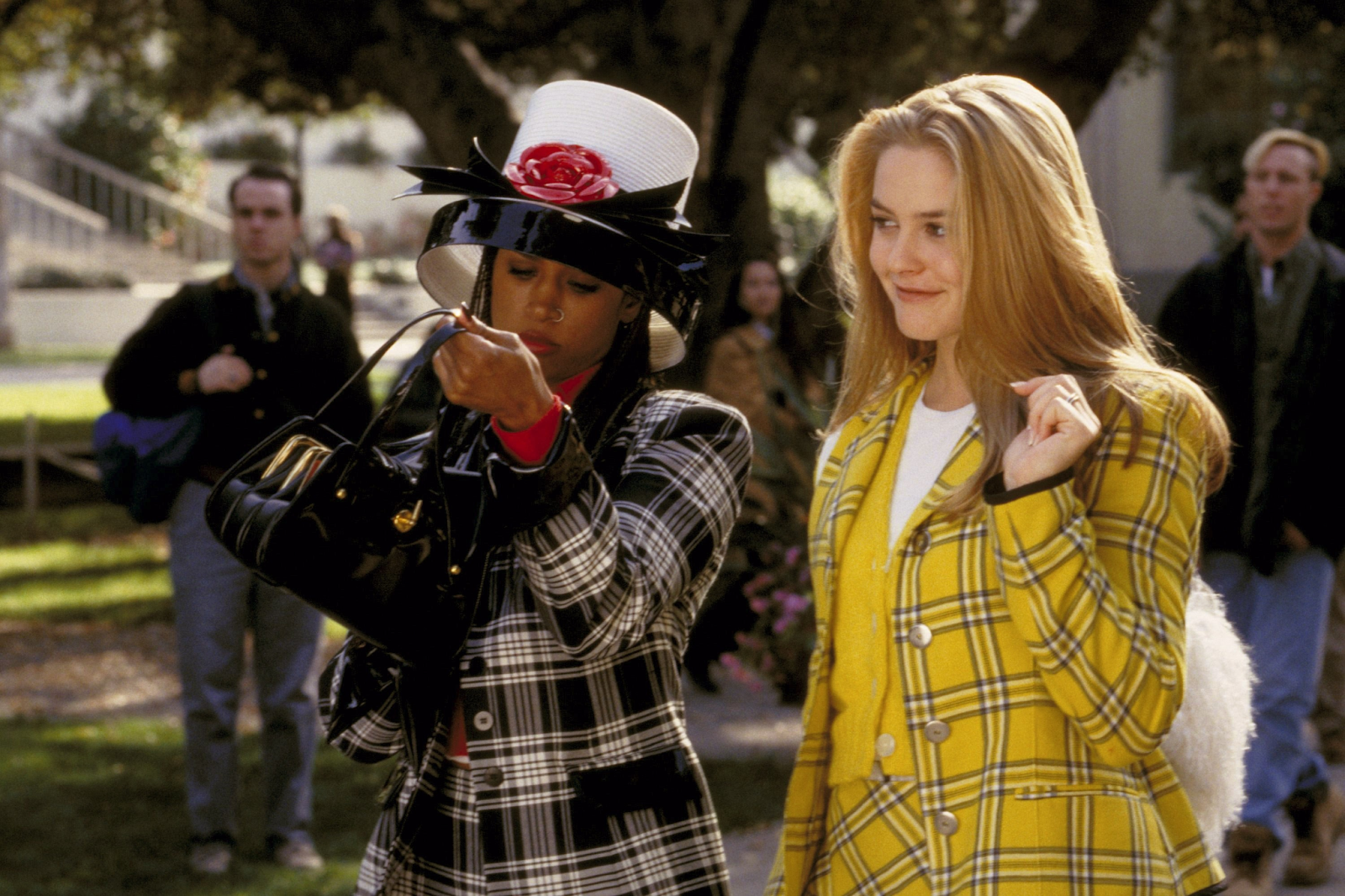
Alicia Silverstone and Stacey Dash as Cher and Dionne in their matching plaid outfits
Photo: Clueless (1995)
3) Elle’s Courtroom Outfit - Legally Blonde (2001)
Elle Woods’ pink courtroom dress appears at the most pivotal moment of Legally Blonde: the scene in which she finally proves her skills as a lawyer after spending the entire film being underestimated. On the surface, Elle is presented as the ultimate “dumb blonde” (one of her most famous lines: “so you’re breaking up with me because I’m too… blonde?”): she is deemed too girly, too pink, and too much. The people around her are more than happy to keep her there, and yet, they all turn out wrong. As the plot unfolds, we see her real intelligence, ambition, and capability. The courtroom scene is crucial to this reveal. In a setting traditionally governed by neutrality, Elle arrives dressed in head-to-toe pink, refusing to give up her own style to be taken seriously. The look marks the core theme of the movie: femininity as power, not weakness.
While colors do not have assigned genders, pink is used in Hollywood movies mainly to represent womanhood and more often than not to make a comment on femininity, women, or sexism. In the courtroom, people in the background are dressed very similarly, mostly black; in fact, men seem to be wearing the exact same outfit. Opposingly, Elle’s dress —with its long sleeves, pale pink trim, sparkly bow belt, matching bag, and obviously also pink heels— doubles down on the very details that are supposed to undermine her credibility. As the costume designer Sophie de Rakoff put it: “She needed to be her most true self at this moment.” Elle stands out of the crowd and the room, challenging the people and the industry that rejected her and saw her style as a sign of unintelligence.
What makes the look iconic is not spectacle, but refusal. Elle doesn’t win in spite of what she’s wearing; she wins because she won’t abandon it. Her femininity isn’t something to overcome; she quite literally wins the case by talking about perms. The outfit collapses the (very outdated) tension between intelligence and femininity that cinema has upheld for decades. Today, the pink courtroom look endures as a symbol of reclaiming femininity as power, endlessly referenced in fashion editorials, pop culture, and conversations about women navigating professional spaces without watering themselves down.
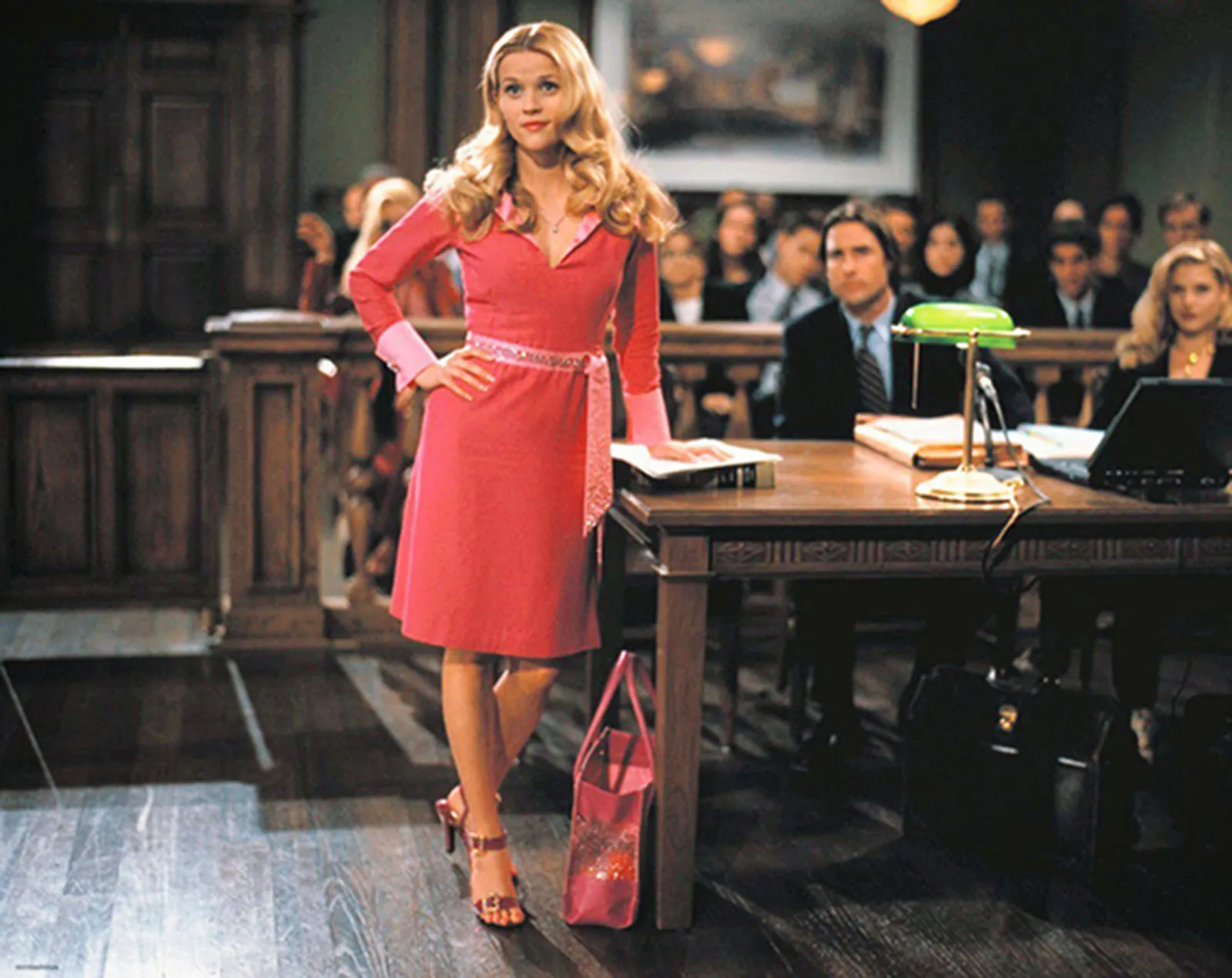
Reese Witherspoon as Elle Woods in the pink courtroom dress
Photo: Legally Blonde (2001)
4) Regina’s “a little bit dramatic” Look - Mean Girls (2004)
Regina George’s infamous “A Little Bit Dramatic” outfit appears early in Mean Girls, long before she is brought down by her protege Cady, from ruling the school to being uninvited to the hottest house parties. Regina is still on top when she is shopping with the Plastics and sipping her coffee in her very Y2K outfit. Her power is communicated visually: through clothing that looks effortless, calculated, and just provocative enough.
The styling is deceptively simple. The baby tee, printed with the phrase A Little Bit Dramatic, paired with a black mini skirt, pink cardigan, and black high heel flip flops. It features minimal accessorizing, nothing attention grabbing except the signature R necklace. The overall look doesn’t feel excessive, which is precisely the point. The slogan is ironically self-aware, hinting at Regina’s ability to perform emotion while remaining emotionally distant. Every element reinforces Regina’s defining trait: control disguised as nonchalance.
The lasting power of this look lies in how accurately it captures Regina’s character at her peak. The outfit does not rely on excess, bold color, or obvious statement pieces; instead, it communicates dominance with casualness. It sets the standard rather than chasing it. The simplicity makes it instantly replicable, yet impossible to equal. Anyone can wear a baby tee and a mini skirt, but only Regina makes it look definitive. Even long after the film’s release, the look remains iconic because it visually defines a specific kind of power that feels casual, intentional, and entirely self-assured.
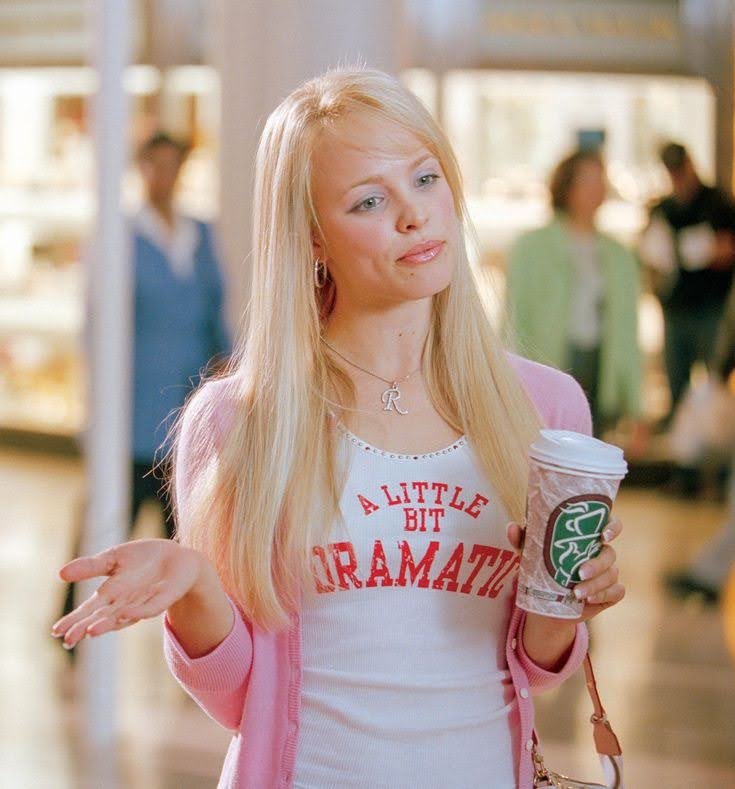
Rachel McAdams as Regina George from the mall scene in Mean Girls
Photo: Mean Girls (2004)
Across decades of cinema, certain outfits refuse to leave our collective memory even when we can’t recall the exact scene they belonged to. They linger because fashion, at its best, becomes storytelling. It works quietly, slipping meaning into color, silhouette, and detail before we even realize it. Using clothes as narrative is deliberate and precise, often addressing the subconscious mind rather than our immediate understanding. These four outfits are not just iconic and unforgettable, but each one says something about the world it exists in and the character who wears it.
XOXO, The Fashion Stock Market
Cover Photo: Breakfast at Tiffany’s (1961)